
I’ll never forget the first time I decided to dye my hair at home. Picture this: me, standing in my tiny bathroom at 11 PM, feeling like a DIY hair goddess with my box of “Midnight Cherry” hair dye. Fast forward 45 minutes, and I looked less like a goddess and more like I’d been in a paintball fight with a burgundy-obsessed opponent. My forehead, ears, and somehow even my neck were decorated with what looked like permanent war paint.
If you’re reading this with dye-stained fingers frantically typing into Google, first of all – breathe. I’ve been there, and I promise you, that stubborn purple streak on your temple isn’t going to be there forever.
After years of home coloring adventures (and mishaps), I’ve become something of an unwitting expert on getting hair dye off skin. Let me share everything I’ve learned through trial, error, and a few panic-induced late-night research sessions.
Table of Contents
- Why Does Hair Dye Stain Skin?
- Prevention Tips: Protecting Skin Before Hair Coloring
- Immediate Action: Remove Hair Dye from Skin Right Away
- Gentle Methods to Remove Hair Dye from Face and Neck
- Effective Home Remedies for Stubborn Hair Dye Stains
- How to Get Hair Dye Off Hands and Fingers
- Commercial Hair Dye Removers for Skin
- Removing Hair Dye from Different Skin Types
- What to Avoid When Removing Hair Dye from Skin
- Aftercare: Treating Skin Post Dye Removal
- Professional Tips from Hair Colorists
- FAQs About Removing Hair Dye from Skin
- Conclusion
Why Does Hair Dye Stain Skin?
Before we dive into the removal methods, let me explain why your skin seems to love holding onto hair dye like it’s precious cargo. Understanding this actually helped me feel less frustrated during my removal attempts.
Hair dye contains pigment molecules that are designed to penetrate and stick – that’s literally their job. When these molecules meet your skin, they don’t discriminate between your hair shaft and your forehead. The outermost layer of your skin, the stratum corneum, is actually pretty similar to hair in some ways, which is why the dye bonds to it so enthusiastically.
I’ve noticed that permanent dyes are usually the worst offenders (looking at you, deep blacks and vibrant reds), while semi-permanent ones tend to be more forgiving. The darker and more vibrant the color, the more likely you’ll end up looking like you’ve joined a face-painting competition you didn’t sign up for. And here’s something interesting I learned: if your skin is dry or damaged, it actually absorbs dye more readily. That explains why my winter dye jobs always seemed messier!
Prevention Tips: Protecting Skin Before Hair Coloring
Okay, I know you might be thinking, “Great, but I already have dye on my skin NOW!” Bear with me for just a second, because future-you will thank present-you for reading this section.
After my first few disasters, I learned that prevention really is worth its weight in hair dye. Now, I never start a coloring session without my barrier cream ritual. I slather petroleum jelly (good old Vaseline) along my hairline, ears, and back of my neck like I’m preparing for a swimming competition. It looks ridiculous, but it works like magic. The dye literally slides right off these areas when you’re done.
I also invested in proper gloves – not those flimsy ones that come in the box that rip if you look at them wrong. I’m talking about reusable salon gloves that actually fit. Game changer! And here’s a pro tip I learned from my hairdresser friend: apply a thin layer of conditioner to your hairline before the petroleum jelly. It creates a double barrier and actually nourishes your skin at the same time.
Immediate Action: Remove Hair Dye from Skin Right Away
This is where I made my biggest mistake during my early dye adventures – I’d wait until I was completely done with my hair before addressing the skin stains. Bad move. The longer dye sits on your skin, the more it oxidizes and sets, making it exponentially harder to remove.
Now, I keep a damp cloth right next to me while I’m applying dye. Every few minutes, I do a quick wipe of any drips or smudges. It feels a bit like that childhood game of rubbing your head and patting your belly at the same time, but you get used to it. If you notice a drip, don’t panic and scrub – just gently wipe it away with a soft, damp cloth. Aggressive rubbing just spreads the stain and can irritate your skin.
Gentle Methods to Remove Hair Dye from Face and Neck
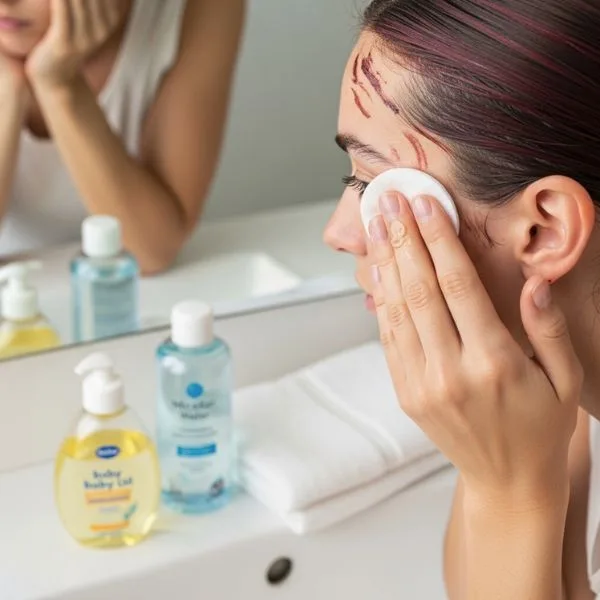
Soap and Water Method
Sometimes the simplest solution is the best one! If you catch the dye early enough, good old soap and warm water can work wonders. I’ve saved myself from many potential disasters just by acting quickly with this basic method. The key is using a gentle face wash or hand soap – nothing too harsh that’ll irritate your skin while you’re trying to clean it.
How to Use:
- Wet the stained area with lukewarm water to open your pores slightly
- Apply a gentle soap or face wash and work into a rich lather
- Use small, circular motions to massage the area for 30-60 seconds
- Rinse thoroughly with warm water and pat dry
- Repeat if necessary, but give your skin a break between attempts
Oil-Based Solutions
Natural oils like coconut oil, olive oil, and baby oil are absolute lifesavers when it comes to removing hair dye. They work by breaking down the pigments in the dye without damaging your skin. Plus, they’re soothing and gentle — you won’t just be getting the hair dye off your neck or hairline, you’ll be giving yourself a little spa treatment! I discovered this method accidentally, and now I never color my hair without having coconut oil on standby.
How to Use:
- Apply a generous amount of oil to the stained area
- Let it sit for 5-10 minutes to loosen the dye
- Gently massage in circular motions for another minute
- Wipe off with a clean, damp cloth or rinse with warm water
- Follow up with your regular face wash if needed to remove excess oil
Makeup Remover and Micellar Water
Micellar water has become my secret weapon against dye stains. It’s designed to break down stubborn makeup, so it works brilliantly on hair dye too. The tiny oil molecules suspended in water give you the best of both worlds – effective cleaning power with incredible gentleness. Even my friend with super sensitive skin swears by this method.
How to Use:
- Soak a cotton pad thoroughly with micellar water or makeup remover
- Press the pad against the stained area for 10-15 seconds
- Gently wipe away in one direction (avoid rubbing back and forth)
- Repeat with fresh cotton pads until the stain is gone
- No rinsing needed with micellar water, but you can splash with cool water if desired
Effective Home Remedies for Stubborn Hair Dye Stains
Baking Soda Paste
When gentle methods aren’t cutting it, baking soda paste is my go-to heavy hitter. It works as a mild abrasive that physically lifts away the stained skin cells. I’ve used this method countless times, though I learned the hard way to be gentle – too much scrubbing and you’ll end up with irritated skin that looks worse than the dye stain!
How to Use:
- Mix 2 teaspoons of baking soda with just enough water to form a paste
- Apply the paste to the stained area (avoid the eye area)
- Let it sit for 60-90 seconds maximum
- Gently rub in circular motions with your fingertips
- Rinse thoroughly with warm water
- Apply moisturizer immediately after to prevent dryness
Toothpaste Method
This accidental discovery has saved me more times than I can count! Regular toothpaste (not gel) contains mild abrasives that can lift dye stains effectively. Plus, you’ll smell minty fresh afterward, which is an oddly satisfying bonus. Just make sure you’re using basic white toothpaste – the fancy whitening ones can be too harsh for facial skin.
How to Use:
- Apply a pea-sized amount of white toothpaste to the stain
- Let it sit for 30 seconds to start breaking down the dye
- Gently rub in small circles using your finger for about one minute
- Rinse thoroughly with lukewarm water
- Pat dry and moisturize if the area feels tight
Rubbing Alcohol or Hand Sanitizer
The alcohol in these products breaks down dye molecules quickly and effectively. I discovered this during the pandemic when hand sanitizer was everywhere! It’s particularly effective on stubborn stains, though I save this method for less sensitive areas since it can be quite drying.
How to Use:
- Soak a cotton ball with rubbing alcohol or squeeze out some hand sanitizer
- Dab (don’t rub) the stained area gently
- Let it sit for 10-20 seconds
- Wipe away with a clean, damp cloth
- Wash the area with soap and water afterward
- Apply a heavy moisturizer to counteract the drying effects
Vinegar and Dish Soap Combination
My grandmother’s suggestion turned out to be pure gold! The vinegar helps break down the dye while the dish soap lifts it away from your skin. Yes, you’ll smell like a salad for a few minutes, but this combo works incredibly well on set-in stains that other methods can’t budge.
How to Use:
- Mix equal parts white vinegar and liquid dish soap (about a teaspoon each)
- Apply the mixture to the stained area with a soft cloth
- Let it sit for 30-45 seconds
- Gently rub in circular motions
- Rinse thoroughly with warm water
- Follow up with moisturizer to restore your skin’s pH balance
How to Get Hair Dye Off Hands and Fingers
Sugar Scrub Method
Hands can handle more aggressive treatment than facial skin, so I go all-out with a DIY sugar scrub. The sugar provides physical exfoliation while oil breaks down the dye – it’s like a two-pronged attack on those stubborn hand stains. Plus, your hands feel baby-soft afterward!
How to Use:
- Mix 2 tablespoons of granulated sugar with 1 tablespoon of olive or coconut oil
- Scrub the mixture into stained areas for 1-2 minutes
- Pay special attention to knuckles and areas around nails
- Rinse with warm water and soap
- Apply hand cream generously afterward
Nail Polish Remover (Acetone) Method
This is my nuclear option for fingers and hands when nothing else works. Acetone is incredibly effective at dissolving dye, but it’s also incredibly drying. I only use this method when I absolutely need the stains gone immediately, and I always follow up with serious moisturizing.
How to Use:
- Soak a cotton ball with acetone-based nail polish remover
- Press against the stained area for 10-15 seconds
- Wipe away in one swift motion
- Immediately wash hands with soap and water
- Apply heavy-duty hand cream or even petroleum jelly to restore moisture
- Avoid using near cuts or sensitive areas as it will sting intensely
Commercial Hair Dye Removers for Skin
After years of home remedies, I finally caved and bought some commercial dye removers. Some are worth the money, others… not so much.
Color remover wipes have become a staple in my dye kit. The ones from Sally Beauty Supply are particularly good – they’re like baby wipes but specifically formulated for dye removal. They’re convenient, gentle, and work surprisingly well on fresh stains. I keep them right next to me during the whole coloring process.
There’s also this product called “Clean Touch” that’s specifically made for removing hair dye from skin. It’s more expensive than my home remedies, but I keep a bottle for those times when I’m coloring my hair before an important event and can’t afford to have any lingering stains.
Removing Hair Dye from Different Skin Types
Sensitive Skin Considerations
My sister has incredibly sensitive skin, and watching her navigate hair dye removal has taught me a lot. For sensitive skin, aggressive methods are out of the question. She sticks to oil-based removers and micellar water exclusively.
She also does a patch test with any new removal method – applies it to a small area first and waits to see if there’s any reaction. It might seem overly cautious, but trust me, a small dye stain is better than an angry, red, irritated patch of skin that lasts for days.
Dry Skin Special Care
Winter dye jobs are particularly challenging for my dry skin. I’ve learned to approach removal differently during these months. I always start with oil-based methods and avoid anything with alcohol or harsh soaps.
After removal, I immediately apply a thick moisturizer – sometimes I even use aquaphor or a healing ointment if the area seems particularly dry or irritated. The key is to restore moisture as quickly as possible to prevent flaking or irritation.
What to Avoid When Removing Hair Dye from Skin
Through painful experience, I’ve compiled a mental list of “never again” methods. Bleach is at the top of that list. Yes, it removes dye, but it can also cause chemical burns. I learned this lesson with a small chemical burn on my neck that took weeks to heal completely.
Avoid using anything abrasive on your face – no loofahs, rough washcloths, or pumice stones. I once tried to scrub a stain off with a textured face cloth and ended up with what looked like rug burn on my temple. Not cute.
Also, don’t mix removal methods without rinsing in between. I once applied rubbing alcohol right after using baking soda, and the combination left my skin red and angry for days.
Aftercare: Treating Skin Post Dye Removal
The removal process, even when gentle, can be tough on your skin. I always follow up with a good moisturizer – something fragrance-free and soothing. Aloe vera gel is fantastic if you’ve been a bit too aggressive with the removal.
If your skin feels irritated or looks red, give it a break. I’ve made the mistake of continuing to scrub at a faint stain when my skin was already irritated, and it only made things worse. Sometimes it’s better to live with a slight stain for a day than to damage your skin.
Professional Tips from Hair Colorists
My hairdresser friend Sarah finally let me in on some salon secrets. Professionals often use a barrier spray before starting any color service – it’s like an invisible shield for your skin. She also told me that in salons, they keep cotton strips specifically for protecting the hairline during coloring.
One tip that blew my mind: if you get dye on your skin at a salon, they often use more dye to remove it. Apparently, wet dye can lift dry dye. I’ve tried this at home with mixed results, but it’s interesting to know!
FAQs About Removing Hair Dye from Skin
How long do hair dye stains last on skin naturally? In my experience, most stains fade within 2-3 days without any intervention. The skin naturally sheds cells, taking the dye with it. However, I’m way too impatient (and vain) to wait that long!
Can hair dye on skin cause permanent damage? The dye itself rarely causes permanent damage, but aggressive removal methods can. I have a tiny scar on my hand from being too rough with pumice stone – lesson learned.
Is it safe to remove dye from around eyes? Extra caution is needed here. I stick to oil-based methods or gentle makeup remover only. The skin is thinner and more sensitive, and you definitely don’t want any harsh chemicals near your eyes.
What’s the fastest way to remove fresh dye stains? Catch it immediately with a damp cloth, or use makeup remover wipes. The faster you act, the easier it is – I can’t stress this enough!
Should different dye colors be removed differently? In my experience, darker colors (blacks, deep browns, vibrant reds) need more aggressive methods, while lighter colors often come off with just soap and water or oil.
Conclusion
Looking back at my journey from dye-disaster amateur to someone who can confidently color at home without looking like a Jackson Pollock painting, I realize it’s all about finding what works for your skin and being prepared.
My medicine cabinet now looks like a dye-removal arsenal – coconut oil, micellar water, color remover wipes, and good old baking soda. But honestly? The best tool in my kit is prevention. That petroleum jelly barrier has saved me countless hours of scrubbing.
Remember, be gentle with your skin. It’s better to repeat a gentle method several times than to go nuclear with harsh chemicals right away. And if you’re doing this the night before a big event and panicking about that stubborn stain on your forehead – deep breath. A little concealer works wonders as a last resort (ask me how I know).
Happy coloring, and may your hair be vibrant and your skin be stain-free!