
Have you ever wondered why you rarely see a natural redhead walking down the street, or why that combination of blonde hair and brown eyes seems so striking? The world of hair color is far more complex and fascinating than most people realize, with some natural shades being so rare they occur in less than 1% of the global population.
Your hair color tells a story written in your DNA, shaped by thousands of years of human migration, evolution, and genetic lottery. While you might take your hair shade for granted, understanding what makes certain colors exceptionally rare reveals a captivating intersection of genetics, geography, and human history.
Table of Contents
- The Science Behind Hair Color
- What Is the Rarest Hair Color in the World?
- Red Hair: The Rarest Natural Hair Color
- Blonde Hair: A Close Second in Rarity
- The Ultra-Rare Hair Color Combinations
- Natural Hair Colors That Change Over Time
- Cultural and Historical Significance of Rare Hair Colors
- The Genetics behind Hair Color Rarity
- Rarest Hair Colors by Geographic Region
- How to Determine Your Natural Hair Color Rarity
- Maintaining and Caring for Rare Natural Hair Colors
- The Future of Rare Hair Colors
- FAQs About the Rarest Hair Colors
- Conclusion
The Science Behind Hair Color
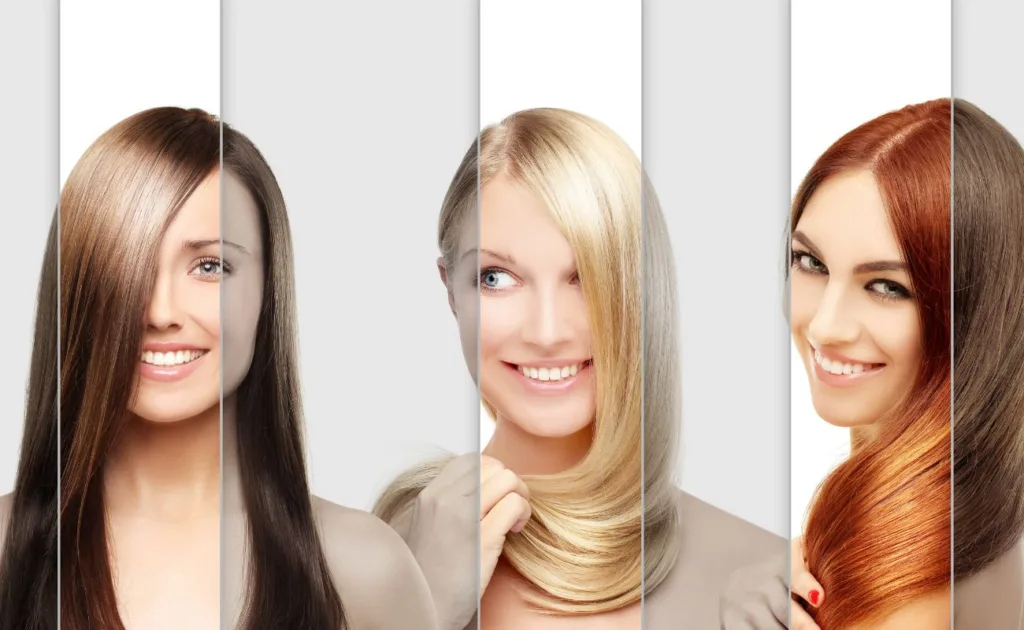
Your hair color is determined by a sophisticated interplay of pigments and genetics that scientists are still working to fully understand. At the heart of this biological artwork are two types of melanin: eumelanin, which is responsible for brown and black shades, and pheomelanin, which creates those coveted red tones that turn heads on the street.
The balance between these two pigments creates the entire spectrum of natural hair colors you see around the world. When your body produces high levels of eumelanin, you get the rich black hair that dominates globally. Lower levels result in brown hair, while very little eumelanin combined with some pheomelanin gives you blonde hair. But when pheomelanin takes center stage, that’s when the magic of red hair happens.
What makes this even more intriguing is how your genetic code orchestrates this pigment production. Multiple genes work together like a complex recipe, with each parent contributing ingredients that determine your final hair color. Some genes are dominant, meaning they tend to override others, while recessive genes like those for red or blonde hair need specific conditions to express themselves.
Also Read: 32 Dark Brown Hair Color Ideas to Elevate Your Style
What Is the Rarest Hair Color in the World?
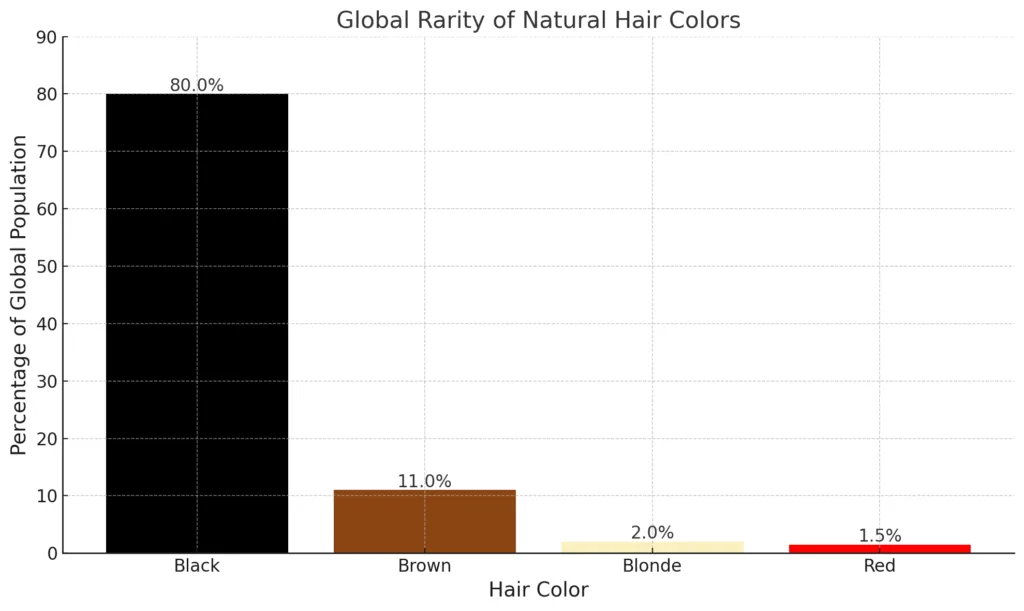
When you look at global statistics, the rarity of certain hair colors becomes strikingly clear. An overwhelming 75-85% of the world’s population has black hair, making it the dominant shade across Asia, Africa, and South America. Brown hair accounts for approximately 11% of people globally, primarily concentrated in Central Europe and parts of the Americas.
This leaves just a tiny fraction of humanity sporting the rarest natural hair colors. Blonde hair, despite its prominence in Western media and beauty standards, occurs naturally in only about 2% of the global population. But the crown for the rarest hair color goes to red, appearing in just 1-2% of people worldwide.
These percentages become even more dramatic when you consider that hair color rarity isn’t evenly distributed. Geographic isolation, historical migration patterns, and evolutionary adaptation have created pockets where rare colors are more common, and vast regions where they’re virtually non-existent.
Red Hair: The Rarest Natural Hair Color
Global Statistics and Distribution
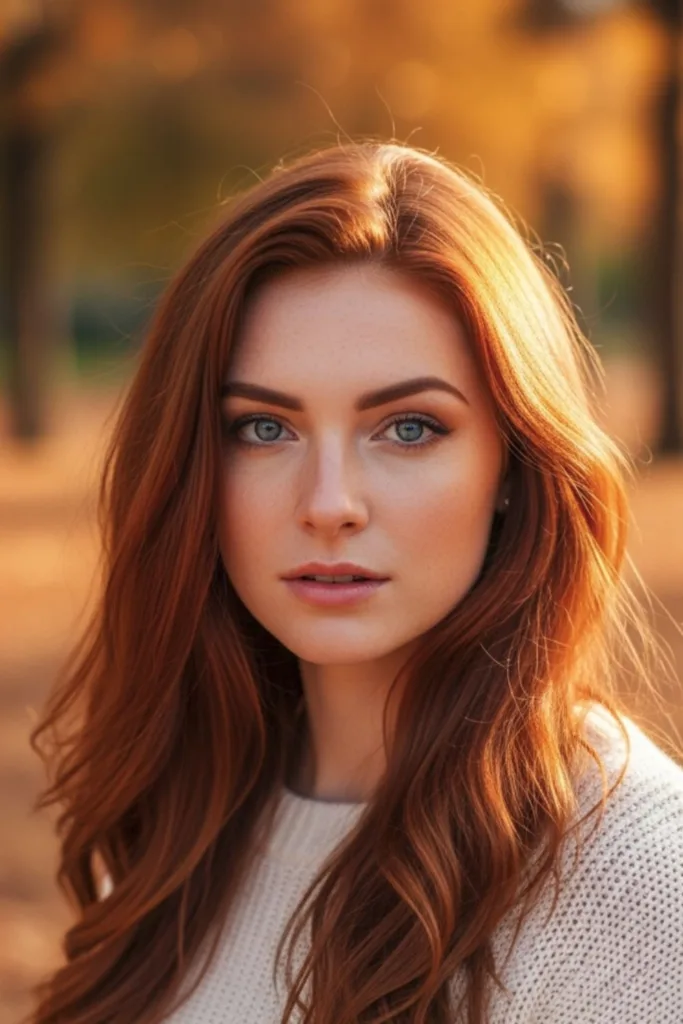
If you’re a natural redhead, you’re part of an exclusive club that makes up less than 2% of humanity. This rarity isn’t random; it’s the result of a specific genetic variant in the MC1R gene that both your parents must carry for you to potentially inherit those flame-colored locks.
The distribution of red hair color across the globe reads like a genetic treasure map. Scotland and Ireland lead the world with approximately 13% of their populations sporting red hair, while many more carry the gene without expressing it. In Eastern Europe and Scandinavian countries, you’ll find scattered populations of redheads, though nowhere near the concentration seen in Celtic nations.
Also Read: 30 Flattering Copper Hair Color Ideas for a Vibrant Makeover
Different Shades of Red Hair
Your red hair, if you have it, likely falls somewhere on a spectacular spectrum. From the subtle strawberry blonde that catches sunlight like golden honey to deep auburn that resembles autumn leaves, each shade tells its own genetic story.
The copper hair colour that’s become increasingly popular in salons worldwide attempts to replicate these natural variations, though achieving the multi-dimensional quality of natural red hair remains a challenge even for experts at establishments like Gusto Hairdressing Salons Central London.
Why Red Hair Is So Uncommon
The mathematics of red hair inheritance explains its rarity perfectly. You need two copies of the recessive MC1R gene variant, one from each parent. Even if both your parents carry the gene, you only have a 25% chance of being a redhead. This genetic lottery, combined with the gene’s limited geographic distribution, keeps red hair perpetually rare.
Interestingly, the MC1R gene does more than just determine hair color. It affects how your body responds to UV radiation protection and even influences vitamin D production, suggesting that red hair evolved as an evolutionary adaptation to specific environmental conditions in northern climates.
Blonde Hair: A Close Second in Rarity
Natural Blonde Hair Statistics
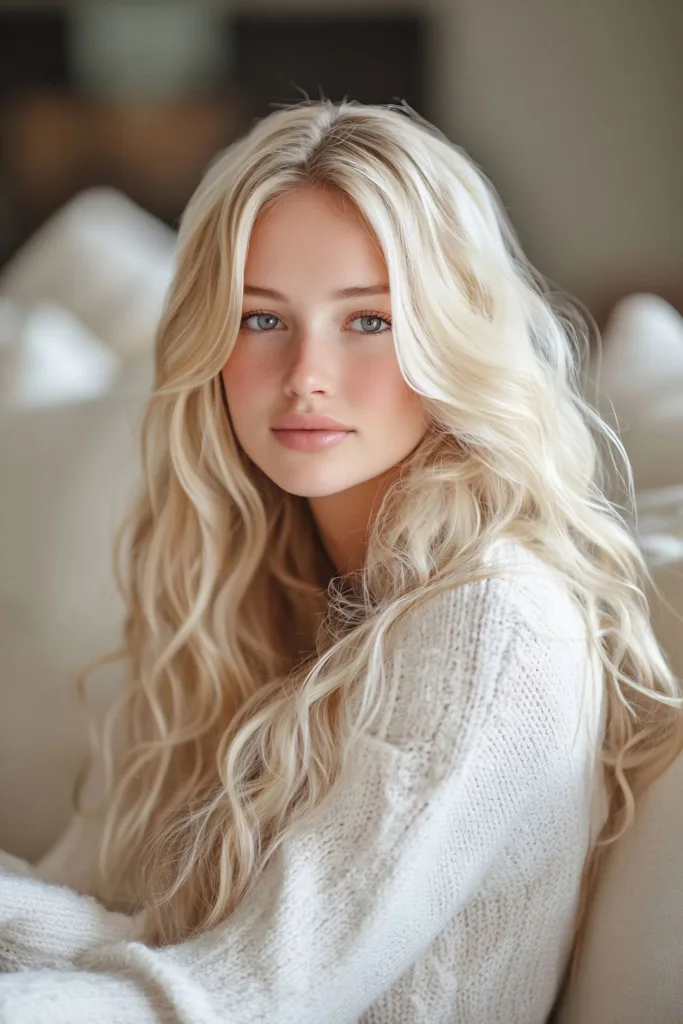
Natural blonde hair claims the silver medal in the rarity Olympics, occurring in only about 2% of the global population. However, this statistic becomes more nuanced when you consider geographic distribution. In Finland, for instance, a remarkable 80% of the population has blonde hair, making it seem common in that region while remaining exceptionally rare globally.
Your blonde hair, if natural, likely started out much lighter in childhood. This age-related darkening is a peculiar characteristic of blonde hair that doesn’t affect other colors as dramatically. Many adults who identify as brunette were actually blonde as children, their hair gradually darkening through adolescence due to increasing melanin production.
Rarest Blonde Variations
Among blonde variations, platinum blonde stands out as particularly rare in adults. This almost white shade requires an extremely low production of eumelanin, a genetic combination that becomes increasingly uncommon with age. Ash blonde, with its cool, grayish undertones, represents another rare variation that occurs naturally in specific populations of Northern and Eastern Europe.
Strawberry blonde occupies a special position as a bridge between blonde and red, requiring a precise genetic combination that produces just enough pheomelanin to add warmth without fully expressing red hair. This delicate balance makes it one of the rarest and most sought-after natural hair colors.
The Ultra-Rare Hair Color Combinations
Red Hair with Blue Eyes
If you have red hair and blue eyes, you’ve won the genetic lottery with a combination that occurs in less than 1% of the world’s population. This pairing requires multiple recessive genes to align perfectly: the MC1R variant for red hair and the recessive genes for blue eyes. The University of Edinburgh has conducted extensive research on this combination, finding it most commonly in Scotland and Ireland, though even there it remains exceptional.
Blonde Hair with Brown Eyes
This combination challenges typical genetic patterns, as the genes for blonde hair and blue eyes often travel together. When you see natural blonde hair with brown eyes, you’re witnessing a rare genetic recombination that occurs more frequently in certain populations where genetic mixing has created unique combinations. Parts of South America and Central Europe occasionally produce this striking pairing.
Black Hair with Blue or Green Eyes
Perhaps the most arresting combination is black hair with light eyes. This pairing typically results from genetic mutations or unique ancestry combinations. You might find this naturally occurring in certain populations of Asia or Eastern Europe, where historical genetic markers from different populations have created these stunning contrasts.
Natural Hair Colors That Change Over Time
Blonde to Brown Progression
If you were blonde as a child but now have brown hair, you’re experiencing one of the most common color transitions. This change typically begins around age seven or eight and can continue into your twenties. Your body’s increasing production of eumelanin as you age causes this shift, turning those childhood golden waves into adult brown hair.
This phenomenon explains why natural adult blonde hair is so rare. While many children in Scandinavian countries start life with light hair, only a fraction maintain that color into adulthood, contributing to blonde hair’s overall rarity.
Premature Gray and White Hair
Premature graying represents another form of rare hair coloring, particularly when it occurs in your twenties or thirties. While not technically a color but rather an absence of pigment, early white hair can create striking natural highlights and patterns. Some individuals develop a distinctive white streak, a condition called poliosis, which can make even common base colors appear unique.
Cultural and Historical Significance of Rare Hair Colors
Red Hair in History and Mythology
Throughout history, your red hair would have marked you as different, for better or worse. Ancient Greeks believed redheads became vampires after death, while ancient Egyptians considered red hair so unlucky that they would sacrifice redheaded men. During the Middle Ages, red hair was associated with witchcraft, leading to persecution across Europe.
Yet red hair has also been celebrated and revered. Celtic warriors were often described with flowing red hair, seen as a mark of fierce strength. Today, the cultural perception has largely shifted to admiration, with red hair often associated with uniqueness and creative spirit.
Blonde Hair Across Cultures
Blonde hair has carried different meanings across cultures and time periods. In ancient Rome, blonde hair was associated with Germanic tribes and considered exotic. The rarity of natural blonde hair in most parts of Asia, Africa, and South America has often led to it being viewed as particularly striking or unusual.
The “blonde stereotype” that persists in Western culture ironically developed in societies where blonde hair is relatively more common. In regions where blonde hair is truly rare, it’s often viewed without these cultural associations, simply as an unusual genetic trait.
The Genetics behind Hair Color Rarity
Recessive vs. Dominant Genes
Understanding why certain hair colors are rare requires grasping the concept of genetic dominance. Black and brown hair genes are dominant, meaning if you inherit them from even one parent, they’ll likely determine your hair color. Blonde and red hair genes are recessive, requiring copies from both parents to express themselves.
This genetic hierarchy creates a mathematical inevitability: dominant traits spread more easily through populations, while recessive traits remain confined to specific genetic lineages. Global migration and genetic mixing tend to favor dominant traits, making recessive colors increasingly rare on a worldwide scale.
Genetic Mutations and Variations
Spontaneous mutations occasionally create entirely new hair color variations. These mutations might affect melanin production in novel ways, creating unique shades or patterns. While most mutations are subtle, some can produce striking results that challenge our understanding of natural hair color possibilities.
Research into genetic markers and ancestry continues to reveal new complexities in hair color inheritance. Scientists have identified over 100 genes that influence hair color to some degree, suggesting that the full spectrum of possible natural hair colors may be broader than currently documented.
Rarest Hair Colors by Geographic Region
Asia and Rare Hair Colors
While Asia is dominated by black hair, fascinating exceptions exist. The Solomon Islands in Melanesia feature a population where blonde hair occurs naturally in about 10% of children, caused by a different genetic variant than European blonde hair. This independent evolution of blonde hair demonstrates how rare traits can develop separately in isolated populations.
Central Asian populations occasionally display red or auburn hair, remnants of ancient migration patterns and genetic mixing along the Silk Road. These occurrences remain extremely rare, making a natural redhead in Asia statistically one of the rarest genetic combinations on Earth.
Europe’s Rare Hair Color Pockets
Europe houses the greatest diversity of natural hair colors, yet even here, true rarity exists. The concentration of red hair in Scotland and Ireland represents a genetic island, surrounded by populations where the trait is far less common. Finland’s exceptional blonde population stands in stark contrast to nearby regions where brown hair dominates.
Eastern Europe presents unique combinations, where historical population movements have created genetic mixing zones. Here you might find unexpected combinations like dark hair with light eyes or variations in hair texture combined with rare colors.
Americas and Africa
In South America and Africa, any hair color other than black is exceptionally rare among indigenous populations. When blonde or red hair does occur naturally, it usually indicates recent European ancestry through global migration and genetic mixing. However, some indigenous populations display unique variations, such as the occasional occurrence of reddish-brown hair in certain South American tribes.
How to Determine Your Natural Hair Color Rarity
To assess your hair color’s rarity, consider both its base shade and any unique characteristics. Look at your hair in natural light, preferably outdoors, as artificial lighting can distort color perception. Compare your shade to global statistics rather than your local population, as regional commonality doesn’t diminish global rarity.
Professional colorists at salons like Gusto Hairdressers Central London can provide expert analysis of your natural shade, identifying subtle undertones that contribute to its uniqueness. They can also determine if your hair displays rare characteristics like natural highlighting patterns or unusual texture-color combinations.
DNA testing services now offer insights into hair color genetics, revealing whether you carry recessive genes that might produce rare colors in your children. These tests can also explain why your hair color might have changed over time or predict future changes.
Maintaining and Caring for Rare Natural Hair Colors
Special Considerations for Red Hair
If you have red hair, your strands are typically thicker but you likely have fewer of them, making proper care essential. Red hair is more susceptible to UV damage, fading even from natural sunlight exposure. Products with UV radiation protection become essential, not optional, for maintaining your color’s vibrancy.
Red hair also tends to be more resistant to dye and harder to maintain if you choose to color it. The unique structure of red hair, combined with its pheomelanin content, creates challenges that standard hair care products don’t always address. Whether you’re maintaining a french pixie cut or long flowing locks, specialized care is crucial.
Preserving Natural Blonde Shades
Your blonde hair faces its own challenges, particularly brassiness caused by mineral deposits and environmental factors. Hard water, chlorine, and pollution can all affect blonde hair’s appearance, turning those golden waves into dull, discolored strands. Purple-toned shampoos and treatments can help maintain the cool tones that make natural blonde hair so striking.
Natural blonde hair is often finer and more delicate than other colors, requiring gentle handling and appropriate products. Whether styled in a bob haircut or worn long, blonde hair benefits from regular deep conditioning and protection from heat styling.
The Future of Rare Hair Colors
Climate Change and Genetic Adaptation
As our planet changes, so might the distribution of hair colors. The evolutionary advantages that produced regional variations in hair color, such as enhanced vitamin D production in low-sunlight regions, may become less relevant as populations migrate and climates shift.
Scientists studying evolutionary adaptation suggest that global warming could theoretically affect the selection pressures that maintain certain hair colors. However, modern human migration and medical advances have largely removed the survival advantages that originally drove hair color evolution.
Genetic Diversity Trends
Global migration and genetic mixing are creating new combinations while potentially diluting rare recessive traits. You might worry that rare hair colors face extinction, but geneticists assure us that recessive genes can hide in populations for generations, occasionally resurging when carriers meet.
The increasing global connectivity might actually preserve genetic diversity by spreading rare genes more widely, even if their expression becomes less geographically concentrated. Your rare hair color genes could travel the world, occasionally expressing themselves in unexpected places.
FAQs About the Rarest Hair Colors
What is the absolute rarest natural hair color?
Red hair remains the rarest at 1-2% globally, with certain shades like true auburn or strawberry blonde being even less common. The combination of red hair with blue eyes represents the rarest color-eye pairing.
Can hair color change naturally in adulthood?
Yes, your hair can naturally darken or lighten due to hormonal changes, aging, or environmental factors. Pregnancy, menopause, and certain medical conditions can all trigger color changes.
Are certain rare hair colors going extinct?
No, rare hair colors aren’t going extinct. While global genetic mixing might reduce geographic concentrations, the genes remain in the population and will continue to express themselves when genetic conditions align.
What determines if a baby will have a rare hair color?
Both parents’ genetics determine a baby’s hair color. For rare colors like red or blonde, both parents must carry the recessive genes, though they might not express them visually themselves.
Is gray/silver hair considered a rare natural color?
In young people, premature gray is indeed rare. Natural silver or gray hair in someone under 30 affects less than 1% of the population, making it rarer than blonde hair globally.
Can diet or environment affect natural hair color?
While diet and environment can affect hair health and subtle tone variations, they cannot fundamentally change your genetic hair color. Severe nutritional deficiencies might affect pigment production, but this is a medical condition rather than a natural variation.
Conclusion
Your hair color, whether common or rare, represents a remarkable intersection of genetics, evolution, and human history. The rarest hair colors in the world, from the flame-red locks seen in Scotland to the unexpected blonde hair of Melanesia, remind us of humanity’s incredible genetic diversity.
These rare shades aren’t just statistical anomalies; they’re living testaments to human migration, evolutionary adaptation, and the beautiful complexity of genetic inheritance. Whether you possess one of these rare colors yourself or carry the hidden genes for them, you’re part of maintaining this precious genetic diversity.
The next time you encounter someone with truly rare natural hair color, remember you’re seeing something that occurs in less than 2% of humanity. In a world of billions, that makes each natural redhead, true blonde, or unusual color combination a walking genetic treasure, adding irreplaceable vibrancy to our human tapestry.