
Choosing the right brown hair shade requires understanding your undertone—whether warm, cool, or neutral—and how it interacts with your complexion and eye color. A honey blonde works beautifully on fair skin with golden undertones, while ash browns complement cool-toned complexions. The real magic happens when dimension meets personalization. Before committing, testing shades through photo simulations or in-person swatches prevents costly mistakes. What specific undertone dominates your skin?
Table of Contents
- Determine Your Undertone: Warm, Cool, or Neutral
- Fair Skin + Warm Undertones: Honey and Caramel Shades
- Fair Skin + Cool Undertones: Ash and Espresso Shades
- Fair Skin + Neutral Undertones: Chocolate and Chestnut Shades
- Medium Skin + Warm Undertones: Golden and Auburn Browns
- Medium Skin + Cool Undertones: Deep Mahogany and Mocha
- Medium Skin + Neutral Undertones: Walnut and Toffee
- Olive Skin + Warm Undertones: Copper and Warm Bronze
- Olive Skin + Cool Undertones: Cool Mahogany and Charcoal
- Olive Skin + Neutral Undertones: Dimensional Chestnut
- Deep Skin + Warm Undertones: Warm Espresso and Cognac
- Deep Skin + Cool Undertones: Rich Ebony and Black-Brown
- Deep Skin + Neutral Undertones: Chocolate and Deep Auburn
- Blue Eyes: Enhance Your Brown Hair Impact
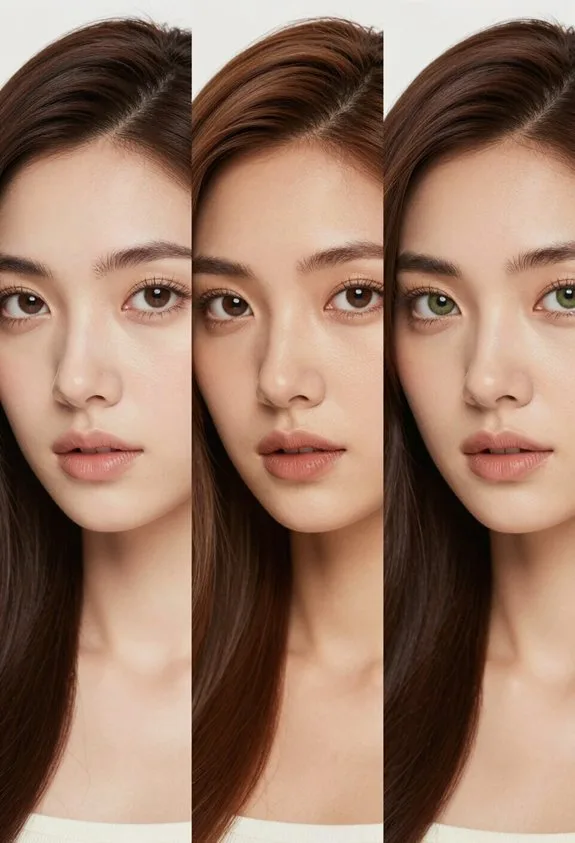
- Green Eyes: Amplify Color Vibrancy
- Hazel Eyes: Bring Out Golden and Complex Tones
- Brown Eyes: Layer Warmth and Depth
- Dark Eyes: Maximize Definition and Radiance
- Red or Auburn Undertones: Which Browns Work Best?
- Gray or Silver Hair: Blending With Brown
- Blonde Roots or Balayage: Brown Base Strategies
- How Your Brown Shade Affects Your Radiance
- Brown Hair Maintenance: Fading and Touch-Up Frequency
- Choosing a Brown Shade for Your Lifestyle
- How to Talk to Your Colorist About Brown
- Test Your Brown Shade: Photo Simulations
- The Swatch Test: Finding Samples in Person
- Common Brown Hair Mistakes to Avoid
- Next Steps: Booking Your Brown Hair Appointment
- Frequently Asked Questions
- Conclusion
Determine Your Undertone: Warm, Cool, or Neutral
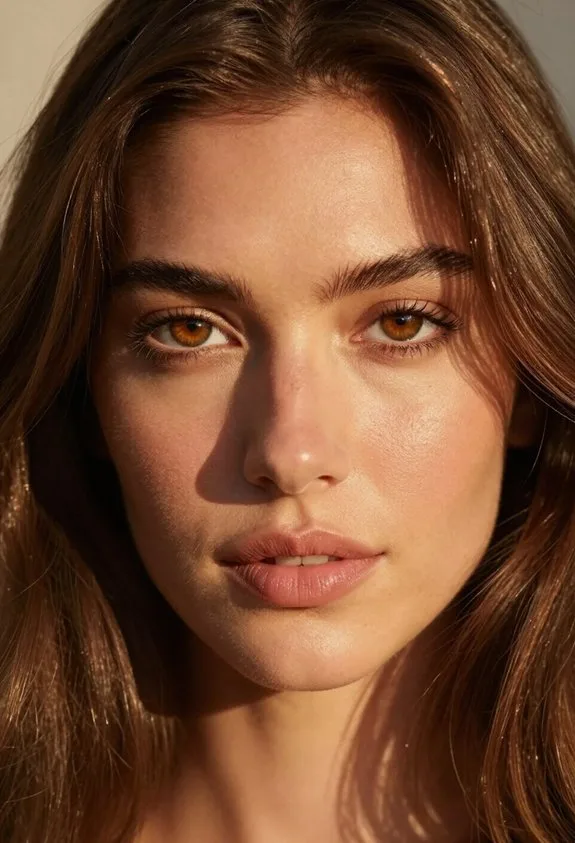
How does one select the perfect brown shade without understanding the canvas it will color? Undertone matters tremendously. Identifying whether skin carries warm, cool, or neutral undertones guides all brown hair decisions effectively.
Warm undertones feature golden, peachy, or yellow hints beneath the skin’s surface. These individuals thrive with caramel, honey, and chocolate brown hues. Cool undertones display pink, red, or blue undertones, pairing beautifully with ash brown and cool espresso shades. Neutral undertones blend both categories, allowing flexibility across the brown spectrum.
A simple vein test reveals undertone reality. Looking at wrist veins determines the undertone category instantly. Green veins indicate warm undertones. Blue veins suggest cool undertones. Purple or mixed veins reveal neutral undertones.
Understanding this foundational element prevents costly salon mistakes. Brown hair becomes transformative when matched correctly to individual skin characteristics.
Also read: 30 RED AND AUBURN BROWN HAIR IDEAS That Add A Bold Warm Glow!
Fair Skin + Warm Undertones: Honey and Caramel Shades
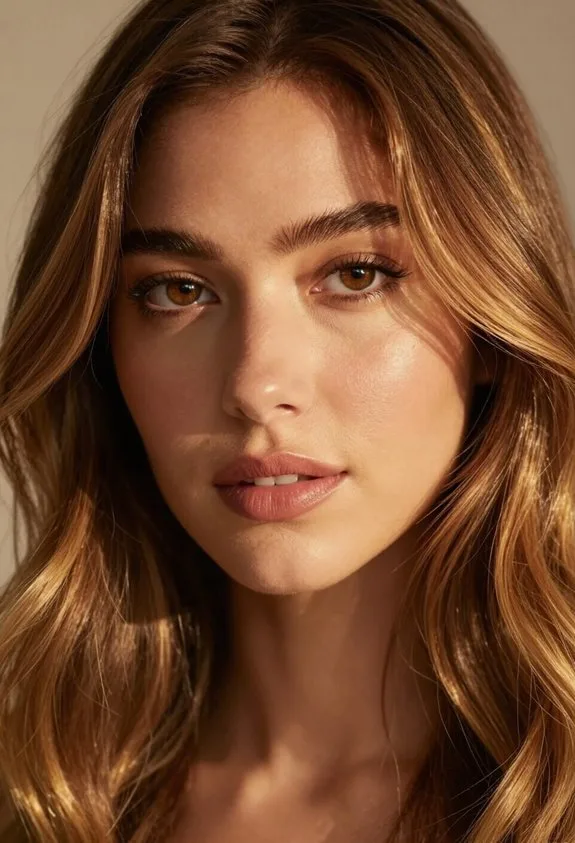
Fair skin paired with warm undertones creates an ideal canvas for honey and caramel brown hair. These golden-toned shades complement the natural warmth in the skin, creating a harmonious, flattering appearance. Honey brunette adds brightness around the face with lighter, sun-kissed dimensional pieces. Caramel brown provides deeper richness while maintaining warmth throughout the mid-lengths and ends.
Colorists recommend using balayage techniques to blend these shades seamlessly. A strategic placement of lighter honey tones near the face enhances complexion. Deeper caramel bases create dimensional depth without looking harsh. Regular toning treatments maintain vibrancy between salon visits.
These warm browns work beautifully with green, hazel, and warm brown eyes. The complementary undertones enhance natural eye color while keeping overall appearance cohesive. Styling with warm-toned highlights amplifies the sophisticated, multidimensional effect.
Fair Skin + Cool Undertones: Ash and Espresso Shades
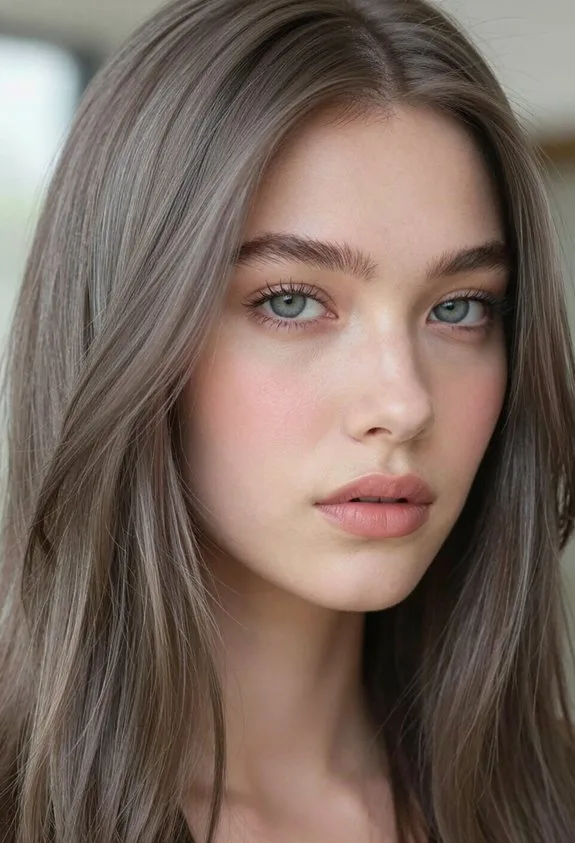
Cool undertones call for an entirely different brown palette than their warm counterparts. Fair-skinned individuals with cool undertones thrive with ash-based browns and espresso shades that complement their natural coloring without clashing.
Ash brown creates a sophisticated, modern look by neutralizing any redness in the skin. Espresso tones add depth while maintaining that cool-toned harmony. Darker shades like charcoal brown work exceptionally well for dramatic contrast.
Colorist Sarah Mitchell notes, “Cool undertones need browns with blue or violet undertones to avoid muddy appearance.” Balayage techniques using cooler ash highlights throughout mid-lengths provide dimensional interest without warmth.
Brands like Wella Professionals and Schwarzkopf offer ash brown formulations specifically designed for cool undertones. These shades enhance fair skin’s luminosity while emphasizing cooler eye colors like blue or gray effectively.
Fair Skin + Neutral Undertones: Chocolate and Chestnut Shades
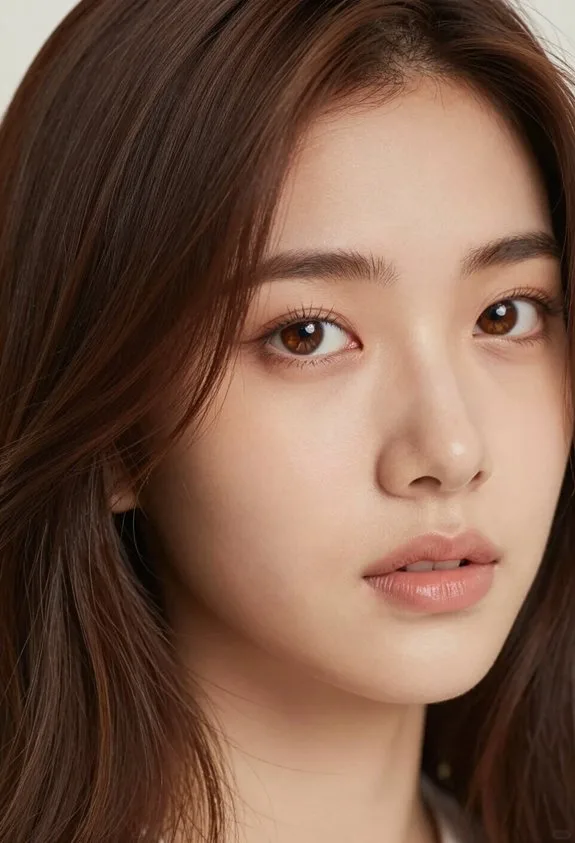
The most versatile fair-skinned individuals possess neutral undertones that work beautifully with warm and cool browns alike. Chocolate and chestnut shades represent the sweet spot for this skin tone category.
Chocolate brown delivers richness and depth without appearing harsh. These warm, medium tones complement neutral undertones exceptionally well. Chestnut shades add golden and reddish dimensions that enhance fair complexions. We can’t get enough of how these colors create natural-looking dimension.
Dimensional styling works best here. Consider adding lighter caramel highlights around the face for warmth and movement. Colorist experts recommend maintaining depth at the roots while brightening mid-lengths and ends, creating flattering contrast.
Brands like Madison Reed and Clairol offer quality chocolate and chestnut options. These shades photograph beautifully and maintain vibrancy through multiple wash cycles when using color-safe products.
Medium Skin + Warm Undertones: Golden and Auburn Browns
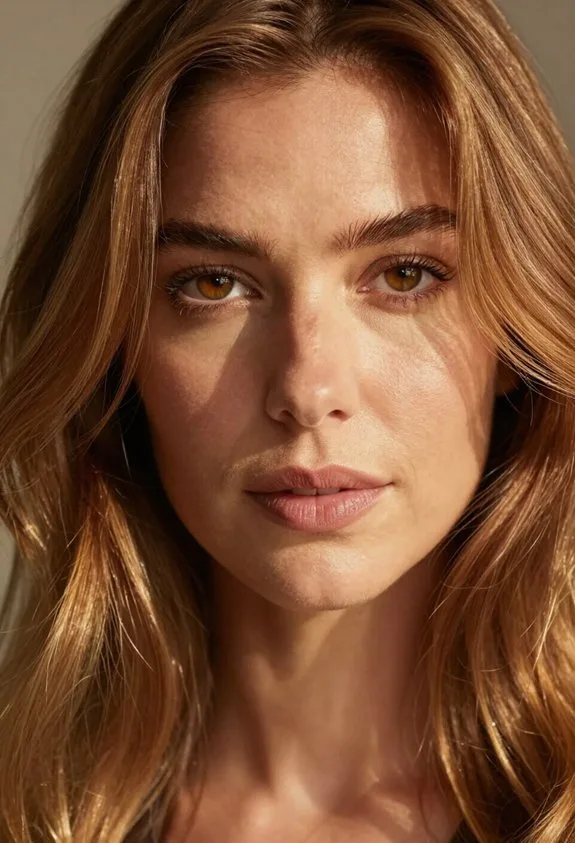
When medium skin pairs with warm undertones, golden and auburn browns become the ideal color match. These shades create natural harmony with the skin’s inherent warmth and radiance. Golden browns like Wella T18 or Clairol Natural Instincts deliver sun-kissed luminosity. Auburn tones add depth while maintaining brightness and visual interest.
Dimensional styling enhances these warm browns considerably. Balayage techniques with caramel highlights create movement and dimension. Root shadowing keeps the look grounded and polished.
According to colorist Maria Chen, “Warm undertones respond beautifully to multi-tonal approaches, especially when layers catch light differently.” Honey-toned babylights and bronde blending offer sophisticated alternatives. These techniques prevent flatness while complementing hazel or warm brown eyes perfectly. Medium skin tones with warm undertones we can’t get enough of these versatile, flattering brown shades.
Medium Skin + Cool Undertones: Deep Mahogany and Mocha
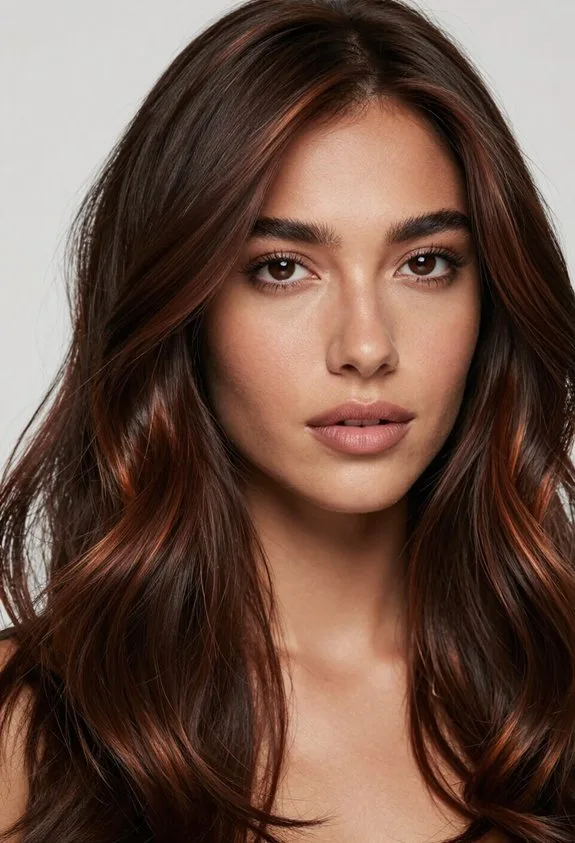
While warm undertones thrive with golden radiance, cool undertones demand a different approach altogether. Deep mahogany and mocha shades create stunning contrast against medium skin with cool undertones, enhancing natural depth and dimension. These rich, jewel-toned browns complement cooler skin undertones beautifully. Mahogany delivers reddish-brown richness that doesn’t read as orange. Mocha provides sophisticated warmth without sacrificing coolness. Brands like Clairol Natural Instincts and L’Oréal Casting Crème Gloss offer excellent formulations in these shades.
“Cool-toned browns should have ash or violet undertones,” explains colorist Marcus Chen. Dimensional balayage with mahogany highlights and mocha lowlights creates movement while maintaining overall coolness. This technique prevents a flat appearance. Adding face-framing pieces enhances cheekbones while keeping the look contemporary and polished for various skin tones within this category.
Medium Skin + Neutral Undertones: Walnut and Toffee
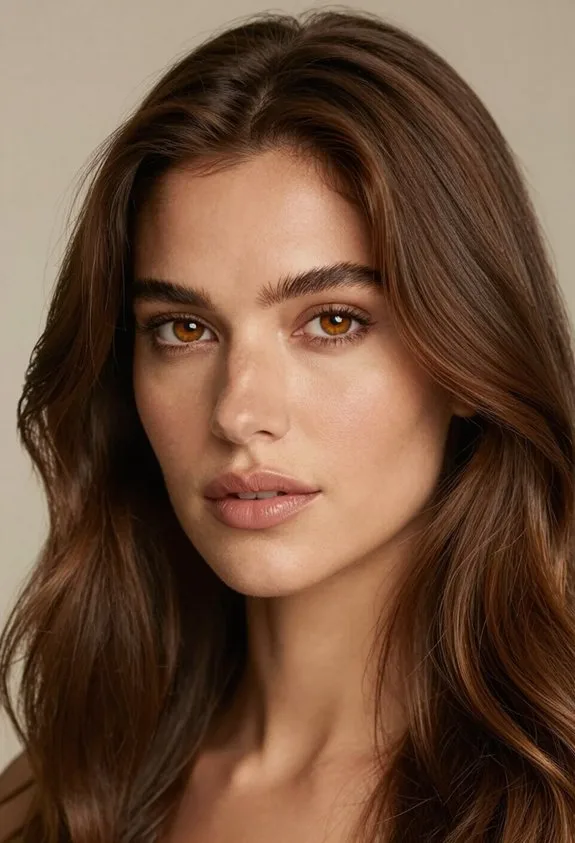
Neutral undertones release remarkable versatility, allowing medium skin to pull off both warm and cool brown shades with equal success. Walnut brown delivers sophisticated depth without leaning too warm or cool. Toffee tones add caramel dimension while maintaining balanced undertones that complement diverse eye colors seamlessly.
These shades work exceptionally well with layered highlights. Dimensional styling creates movement and prevents flat appearance. Experts recommend balancing darker roots with lighter mid-lengths for contemporary appeal.
For walnut, consider brands like Clairol Natural Instincts or L’Oréal Casting Crème Gloss. Toffee shades shine through Wella Color Charm or Madison Reed formulations. Both options enhance neutral undertones without appearing orange or ashy.
Medium skin with neutral undertones can shift between seasons effortlessly. Summer sun intensifies toffee’s warmth naturally. Winter suits walnut’s rich, grounded aesthetic perfectly.
Olive Skin + Warm Undertones: Copper and Warm Bronze
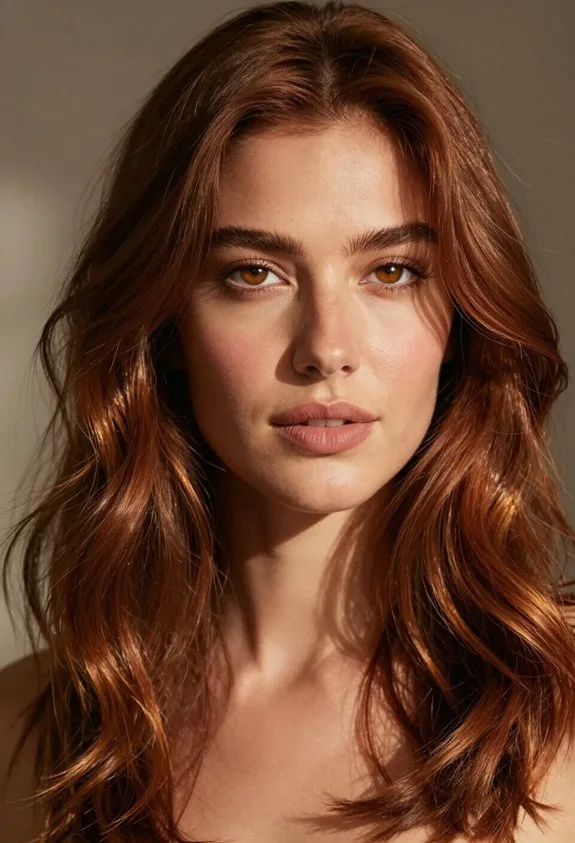
Olive skin paired with warm undertones creates an ideal canvas for copper and warm bronze shades. These rich, golden-toned colors amplify natural warmth while enhancing olive’s greenish undertones beautifully.
Copper hues bring dimensional brightness to olive complexions. Balayage techniques with copper highlights create movement and depth, especially when placed around the face. Warm bronze offers sophisticated richness without overwhelming darker olive tones.
According to colorist Maria Chen, “Copper and bronze shades contain red and gold pigments that complement olive skin‘s natural undertones, creating harmonious contrast.” These colors work exceptionally well for both warm and deep eye colors—browns, ambers, and hazels particularly benefit.
Dimensional styling matters greatly here. Blend copper highlights with bronze lowlights for sophisticated, multi-tonal results. This approach prevents flatness while maintaining color harmony. Products like Wella Professionals and Redken provide excellent warm-toned formulations for achieving these looks professionally.
Olive Skin + Cool Undertones: Cool Mahogany and Charcoal
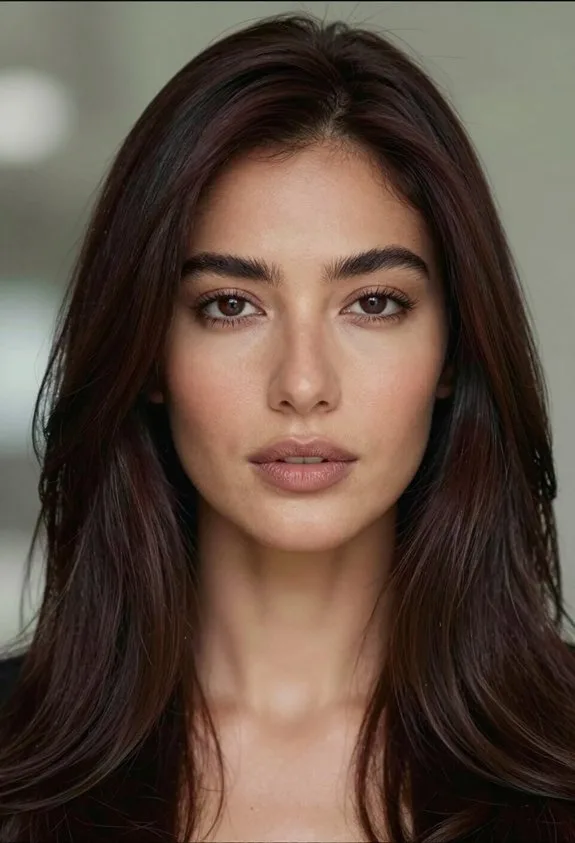
How do cool undertones transform olive skin‘s natural palette? Cool mahogany and charcoal brown shades create stunning contrast against olive complexions. These deeper, jewel-toned browns minimize redness while amplifying skin’s natural richness.
Cool mahogany brings burgundy undertones that complement olive skin beautifully. This shade works exceptionally well for those seeking dimension without warmth. Charcoal brown offers a sophisticated alternative, delivering depth and mystery.
According to colorist Marcus Chen, “Cool browns create a harmonious balance where olive skin becomes the hero rather than competing with hair color.” Dimensional styling enhances this effect—darker roots with cooler mahogany midlengths create visual interest.
Products like Wella T18 toner or Schwarzkopf Ignite Color maintain these cool tones effectively. The result? Effortless sophistication that lets natural skin undertones shine.
Olive Skin + Neutral Undertones: Dimensional Chestnut
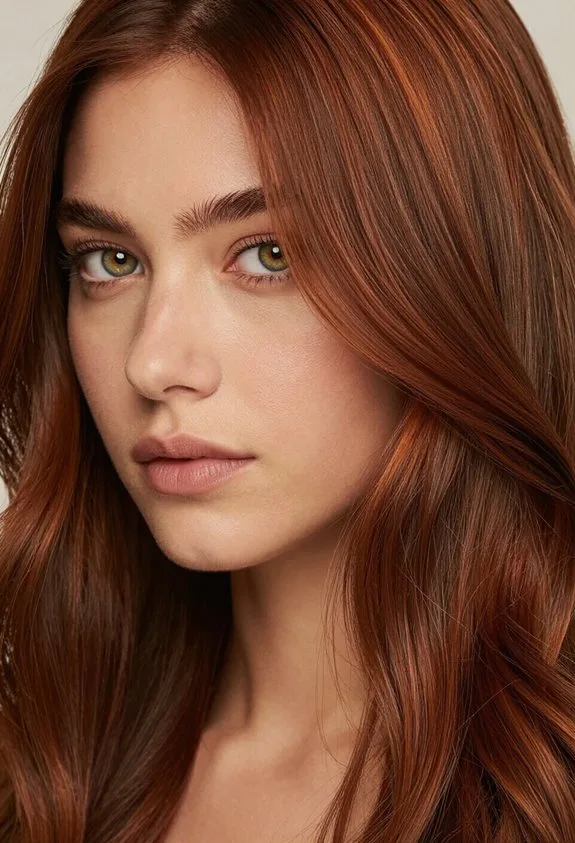
Balancing warmth and coolness, dimensional chestnut delivers the perfect middle ground for olive skin with neutral undertones. This shade combines lighter honey tones with deeper chocolate layers, creating natural-looking depth without appearing too warm or ashy.
Dimensional chestnut works beautifully because it complements olive’s green undertones while avoiding color clash. Colorist Sarah Chen explains, “Neutral undertones need shades that don’t compete—chestnut achieves this through strategic placement.”
The styling technique matters greatly. Placing lighter chestnut around the face brightens complexion while darker roots add dimension and structure. This balayage approach prevents a flat, one-dimensional appearance that can overwhelm olive skin.
Products like Garnier Olia in Medium Chestnut or Clairol Natural Instincts deliver this effect affordably. The result? Multidimensional hair that enhances rather than overwhelms.
Deep Skin + Warm Undertones: Warm Espresso and Cognac
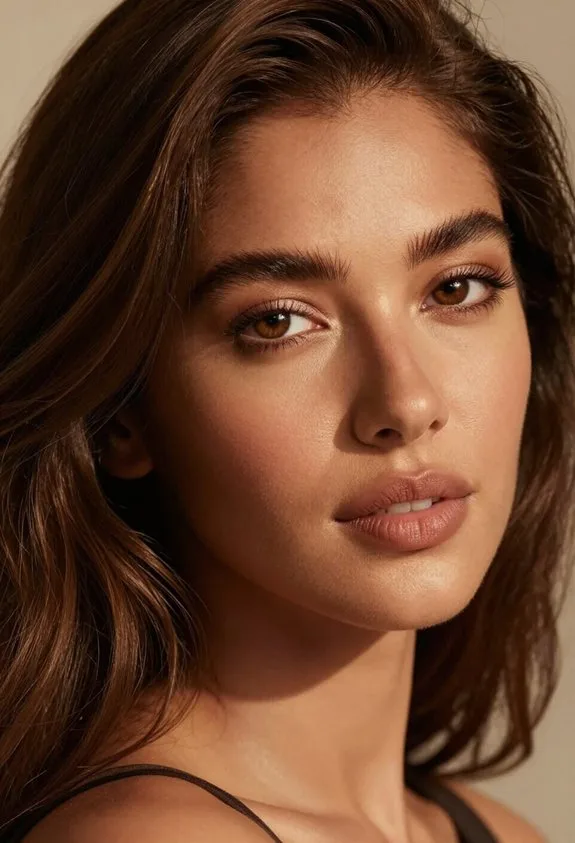
For deep skin with warm undertones, rich brown shades like warm espresso and cognac create stunning contrast and depth. These luxurious tones enhance natural radiance beautifully. Warm espresso delivers a sophisticated, dimensional look with subtle auburn undertones that catch light elegantly. Cognac brings warmth and richness, creating depth throughout the hair.
Dimensional styling amplifies these shades’ impact. Consider adding honey or caramel highlights to mid-lengths and ends for movement and dimension. Balayage techniques work particularly well, blending warm tones seamlessly.
For maintenance, colorists recommend sulfate-free shampoos designed for color-treated hair. Olaplex treatments preserve vibrancy between salon visits. Deep conditioning masks every week strengthen strands and maintain shine.
These warm browns complement brown and hazel eyes exceptionally well, creating a cohesive, harmonious appearance that feels both polished and effortlessly natural.
Deep Skin + Cool Undertones: Rich Ebony and Black-Brown
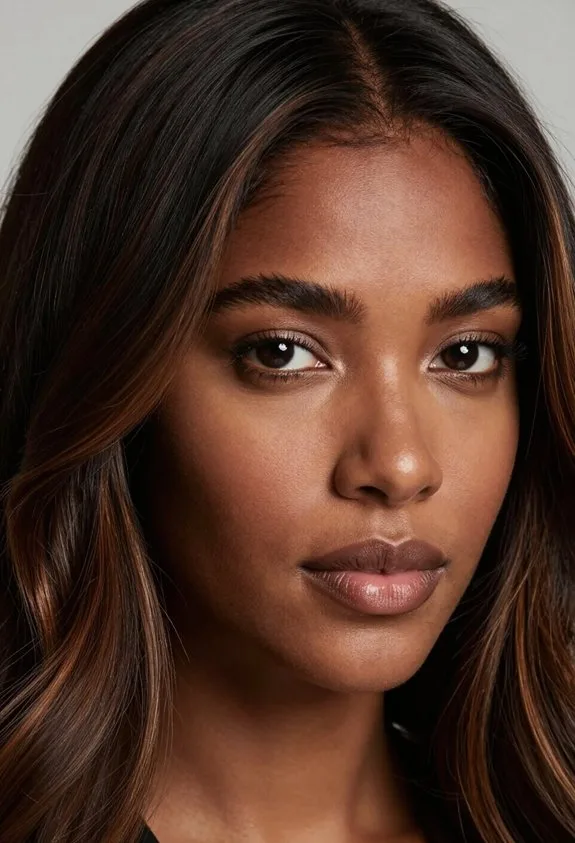
While warm undertones celebrate radiance through golden hues, cool undertones demand a different approach entirely. Rich ebony and black-brown shades create stunning contrast against cool-toned deep skin. These jewel-like colors enhance natural undertones without competing for attention.
Black-brown offers versatility across various styles and occasions. The shade sits between pure black and warm brown, providing dimension without harsh lines. Colorist Sarah Chen notes, “Black-brown works because it complements cool undertones while maintaining depth.”
Rich ebony delivers maximum drama and sophistication. This nearly-black shade emphasizes cool undertones beautifully. Dimensional highlights in deep plum or cool ash create movement without compromising the base color’s intensity.
Professional application guarantees peak results. Olaplex No. 3 Hair Perfector and K18 Leave-In Molecular Repair Hair Mask maintain color vibrancy. Both shades flatter brown, hazel, and green eyes equally well, we can’t get enough of their versatility.
Deep Skin + Neutral Undertones: Chocolate and Deep Auburn
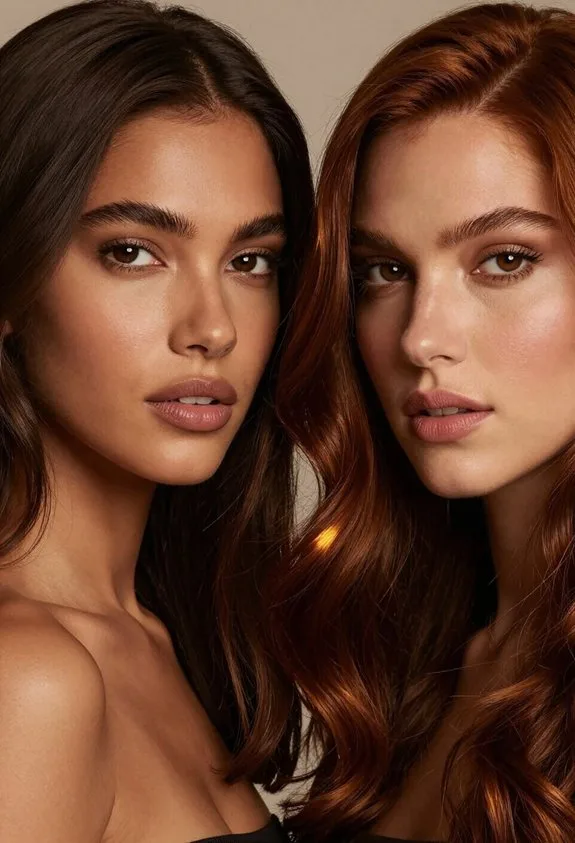
Neutral undertones open unique possibilities for deep skin that neither warm nor cool palettes fully capture. Chocolate brown serves as the foundational shade, delivering rich depth without excessive warmth or coolness. Deep auburn introduces subtle red undertones that complement neutral skin without appearing brassy or unnatural.
Stylists recommend balancing these shades through strategic placement. Face-framing highlights in deep auburn around the temples create dimension while chocolate brown maintains density at the roots. This combination prevents a flat appearance while maintaining sophistication.
According to colorist Marcus Webb, “Neutral undertones thrive with earthy, muted tones that echo natural richness.” Products like Clairol Natural Instincts or SheaMoisture Color Depositing Conditioner in Deep Mahogany achieve these results without harsh processing.
The result: polished, dimensional hair reflecting natural beauty perfectly.
Blue Eyes: Enhance Your Brown Hair Impact
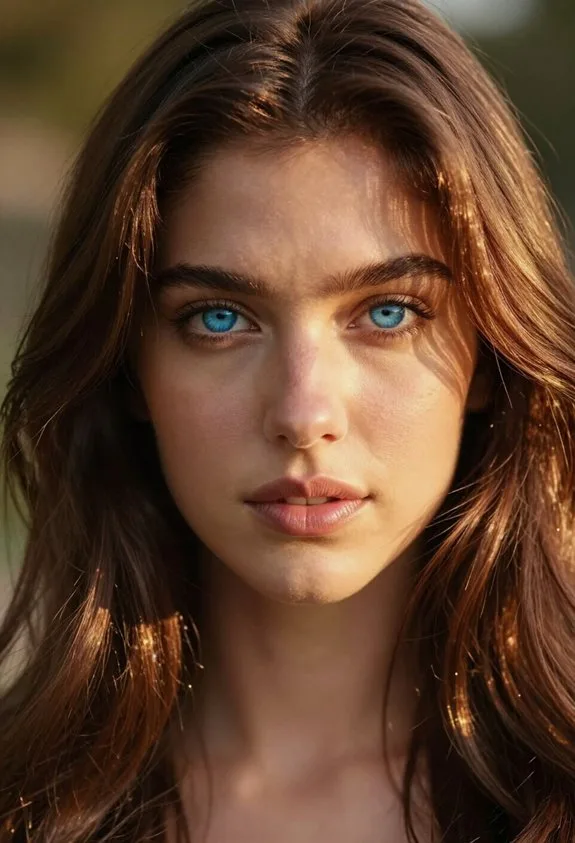
Blue eyes reveal a distinct advantage when paired with brown hair, creating natural contrast that amplifies both features simultaneously. The cool undertones in blue eyes complement warm brown shades beautifully. Rich chocolates and deep auburns make blue eyes appear more vibrant and striking.
Dimensional styling enhances this pairing remarkably. Lighter caramel highlights or honey-toned babylights near the face create a lifting effect that makes blue eyes pop. These lighter pieces draw attention upward toward the eyes naturally.
Color specialist Maria Chen notes, “Blue-eyed clients see dramatic results with dimensional brown palettes that include subtle warmer tones throughout.”
Consider investing in purple-toning shampoos to neutralize any brassiness that might compete with eye color. Glossy finishes amplify the reflective quality that makes blue eyes stand out. This combination creates undeniable visual impact.
Green Eyes: Amplify Color Vibrancy
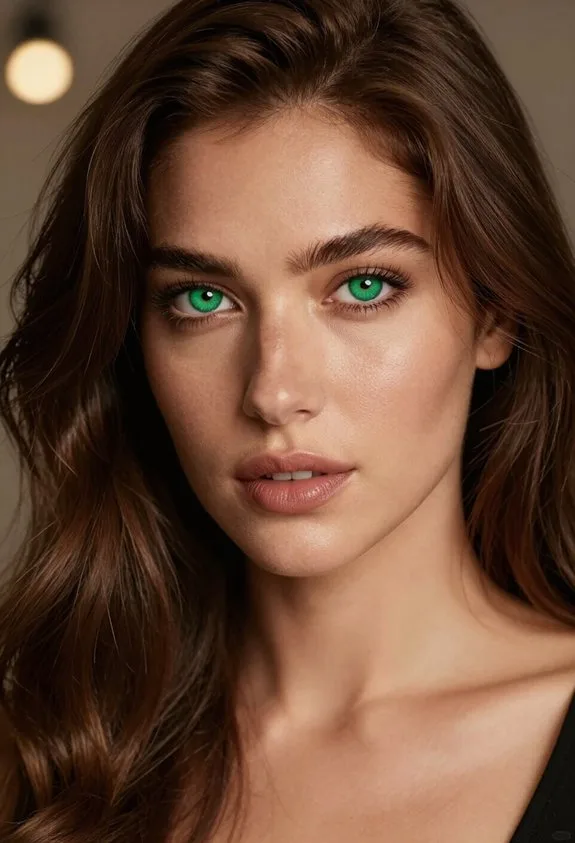
Green eyes demand rich, warm brown tones that make their unique hue practically glow. Caramel and golden brown shades create stunning contrast against green irises. These warmer undertones amplify the eye’s natural vibrancy without competing for attention.
Dimensional styling enhances this effect greatly. Lighter honey highlights near the face brighten green eyes, while deeper chocolate lowlights add dimension. This technique creates visual movement that makes eyes appear more luminous.
According to colorist Sarah Chen, “Warm brunettes with golden undertones are the ultimate complement for green eyes.” Products like Wella Color Charm in Golden Brown or L’Oréal Paris Casting Crème Gloss in Caramel Blonde deliver these results effectively.
Strategic placement matters too. Keeping darker tones toward the roots grounds the look while maintaining that coveted glow.
Hazel Eyes: Bring Out Golden and Complex Tones
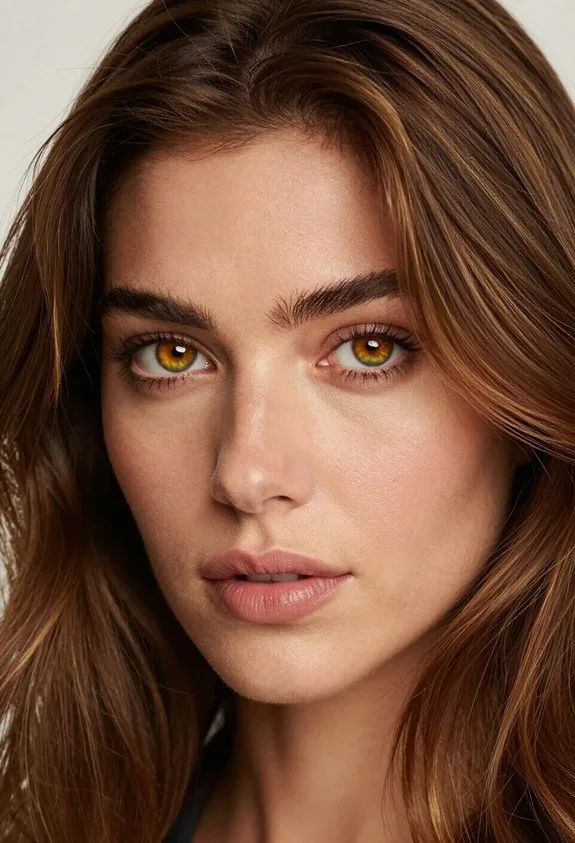
Balayage techniques depositing warm bronzes throughout mid-lengths and ends enhance the eye’s inherent warmth. Cool-toned highlights should be avoided entirely. Brunettes can experiment with subtle auburn lowlights that echo the amber flecks present in hazel irises. This interplay between warm and neutral shades creates visual harmony. The strategic placement of warmer tones near the face flatters hazel eyes most effectively.
Brown Eyes: Layer Warmth and Depth
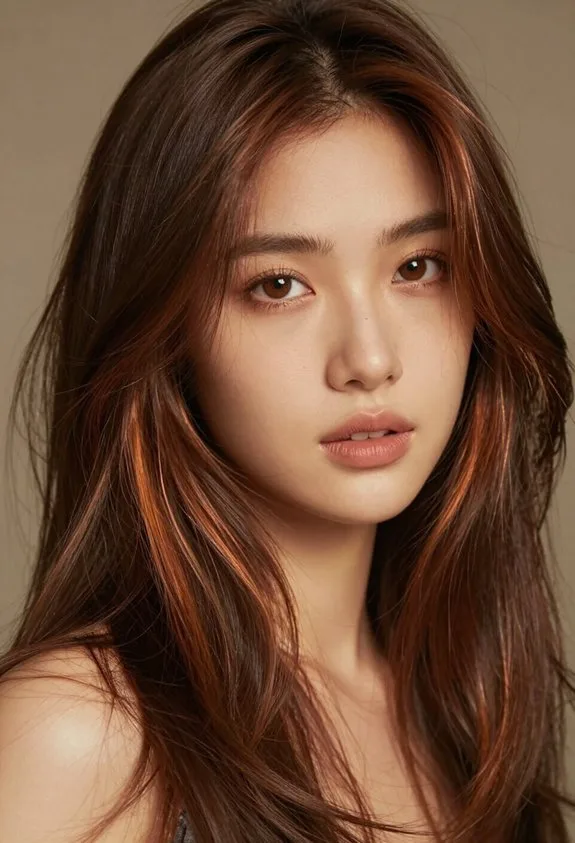
Brown eyes are remarkably versatile canvases for color experimentation. These deeper irises benefit tremendously from warm, multidimensional tones that create visual contrast and depth. Rich chocolate browns, copper highlights, and caramel balayage illuminate the natural richness of brown eyes beautifully.
Layering multiple shades builds dimension that brown-eyed individuals can’t get enough of. A colorist might combine espresso roots with honey and bronze mid-lengths, creating sophisticated movement throughout the hair. According to celebrity colorist James Chan, “Warm undertones in brown hair make brown eyes pop because they create natural color harmony.”
Dimensional styling also works through subtle highlights. Placing warm caramel or golden blonde pieces strategically around the face and crown adds luminosity without overwhelming darker features. This technique transforms ordinary brown hair into a dynamic, multifaceted style that flatters brown eyes perfectly.
Dark Eyes: Maximize Definition and Radiance
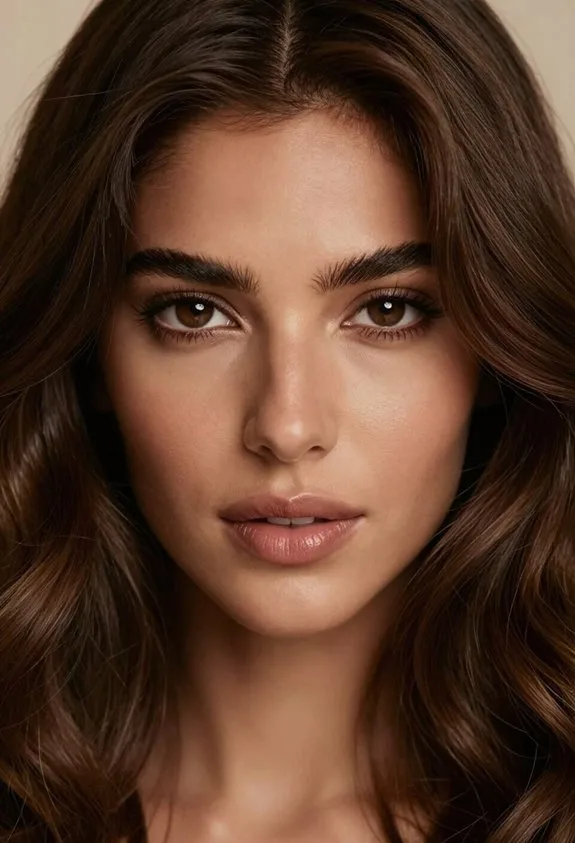
While brown eyes thrive on warmth, darker eye colors demand a different approach entirely. Deep, rich brunette shades create striking contrast against darker irises, amplifying their natural intensity and depth. Consider rich chocolate browns with subtle caramel highlights to enhance definition without washing out darker eye tones.
Dimensional coloring works exceptionally well here. Strategically placed lighter pieces around the face catch light and draw attention to the eyes. A colorist might suggest honey or golden undertones in face-framing sections for maximum radiance.
“Darker eyes benefit from brunettes with high contrast,” explains celebrity colorist Marcus Webb. “The goal is creating visual dimension that makes the eyes pop.”
Deep espresso root shadows paired with glossy midtones amplify this effect beautifully. This approach maximizes eye definition while maintaining sophisticated elegance throughout the entire look.
Red or Auburn Undertones: Which Browns Work Best?
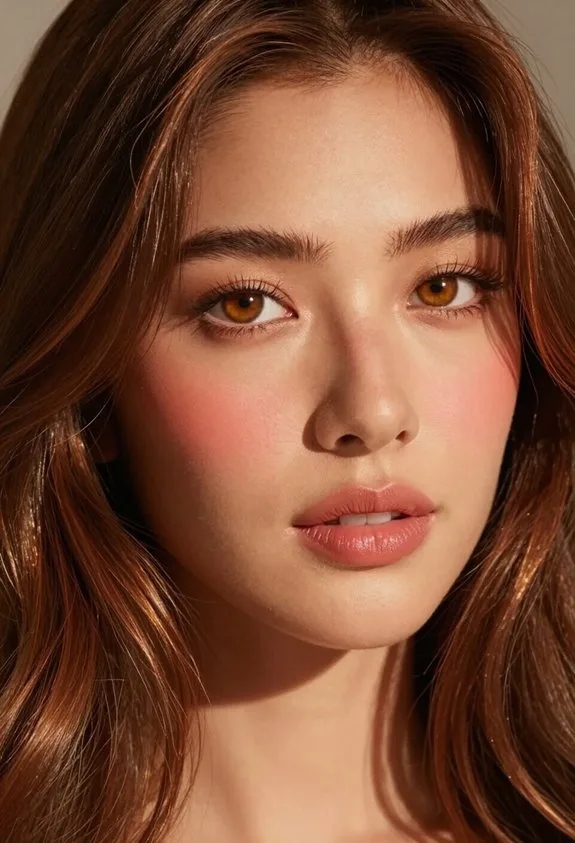
How do warm undertones transform the entire brown hair palette? Red and auburn browns create stunning depth for those with warm skin tones and dark eyes. These shades amplify natural radiance without overwhelming delicate features.
Copper-infused browns, like Clairol Natural Instincts in Medium Auburn, enhance warm complexions beautifully. Dimensional styling with face-framing highlights in caramel tones adds movement and definition. A colorist might suggest balayage techniques to blend warm browns seamlessly.
Deep mahogany shades work exceptionally well for richer skin tones. According to color expert James Boehmer, “warm undertones need saturation to truly pop against skin.” Root smudging with lighter auburn prevents harsh regrowth lines while maintaining sophistication.
Maintenance matters greatly. Purple-toned shampoos prevent unwanted brassy fading, keeping undertones vibrant and true.
Gray or Silver Hair: Blending With Brown
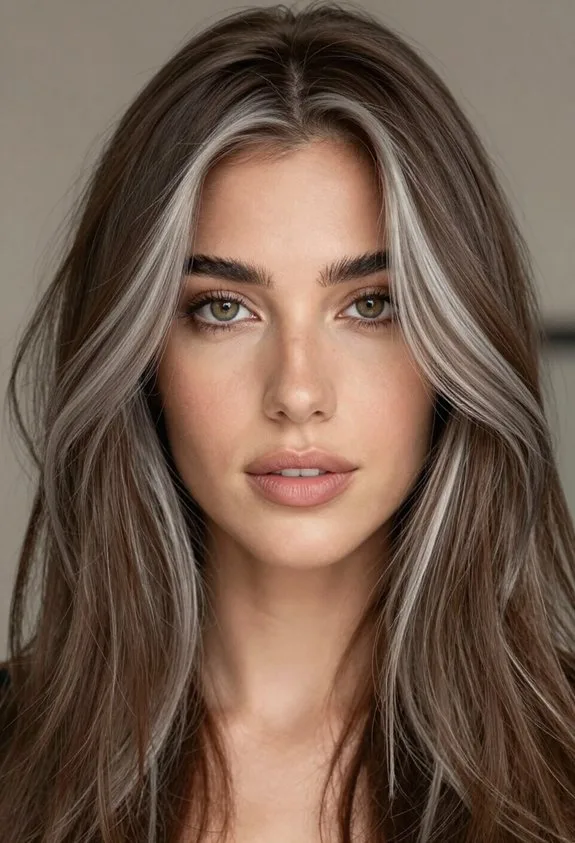
Blending gray or silver strands with brown hair creates a sophisticated, modern aesthetic that celebrates natural texture rather than fighting it. This approach, often called “bronde” or dimensional graying, works beautifully across all skin tones and eye colors when executed strategically.
Colorists recommend using demi-permanent formulas like Clairol Natural Instincts or Wella T18 to deposit warm or cool tones. The key lies in placing silver highlights strategically around the face, framing cheekbones and temples for maximum dimension.
According to colorist Maria Chen, “blending gray naturally requires understanding undertones in both existing brown and emerging silver.” Deeper brunettes benefit from rich chocolate or mahogany bases. Lighter browns pair seamlessly with platinum or champagne accents. Regular toning treatments every four weeks maintain vibrancy and prevent brassiness while enhancing the sophisticated interplay between colors.
Blonde Roots or Balayage: Brown Base Strategies
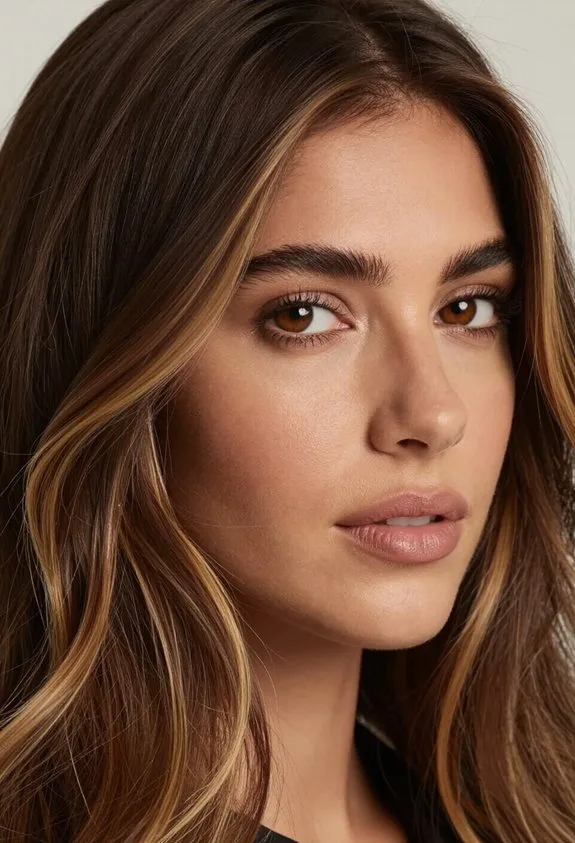
For those ready to embrace a bolder contrast, blonde roots or balayage on a brown base offers the freedom to experiment with dimension without committing to full lightness. This technique creates natural-looking depth and movement throughout the hair.
Balayage works beautifully on deeper skin tones, where warm caramel and honey highlights enhance radiance. Cooler undertones benefit from ashier blonde pieces that complement their complexion. The placement matters markedly. Concentrating lighter strands around the face brightens features and draws attention upward.
Maintenance requires quality purple-toning shampoos to prevent brassy yellowing. Olaplex No. 3 Hair Perfector strengthens chemically treated lengths. Root touch-ups typically need renewing every eight to twelve weeks, depending on hair growth rate and desired contrast intensity.
This approach balances boldness with practicality, offering dimension without high-maintenance commitment.
How Your Brown Shade Affects Your Radiance
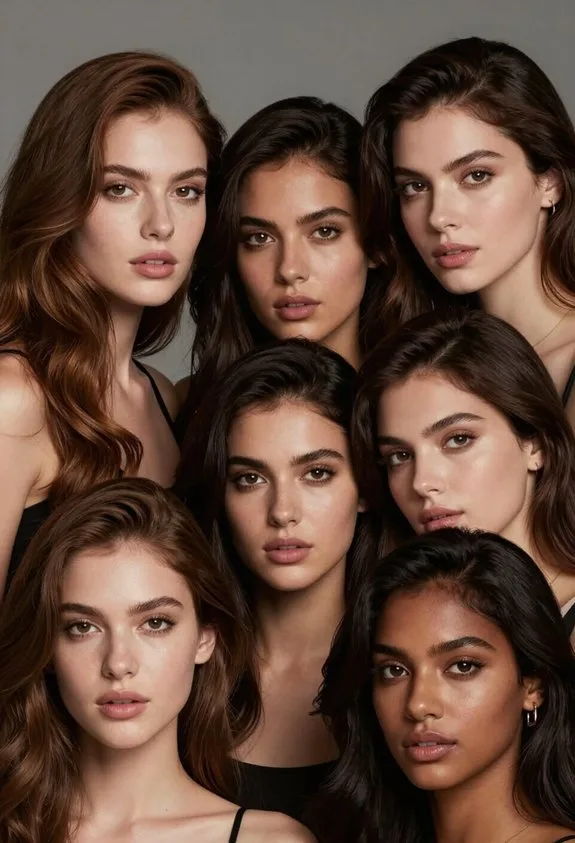
The depth and undertone of brown hair act as a foundation that either amplifies or diminishes facial luminosity, making shade selection essential for achieving radiance. Cooler brunettes with ash undertones complement fair and olive complexions beautifully. Warm chocolate and caramel shades enhance deeper skin tones and golden undertones. The right brown shade creates visual harmony between hair, skin, and eyes.
Dimensional brunette coloring—achieved through strategically placed highlights and lowlights—generates movement and dimension that naturally brightens the face. Rich espresso tones with golden babylights create luminosity without harsh contrast. Colorist Sarah Chen explains: “Strategic placement of lighter pieces near the face reflects light directly onto skin, creating an instant lifting effect.”
Ash-brown bases suit cooler undertones. Bronze-infused browns warm neutral complexions. This strategic approach guarantees brown hair becomes a radiance multiplier, not a flatness reducer.
Brown Hair Maintenance: Fading and Touch-Up Frequency
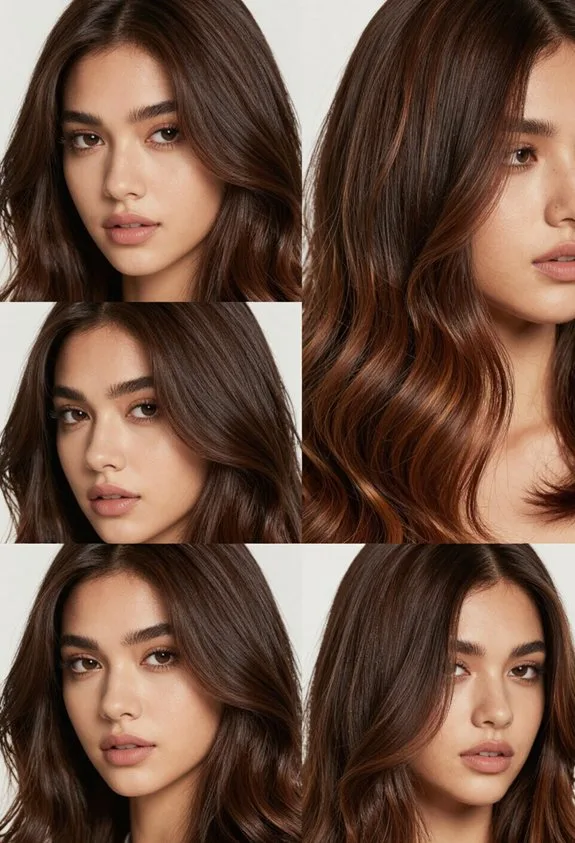
Achieving that perfect brown shade is only half the battle—keeping it looking fresh requires understanding how color fades and planning regular maintenance accordingly. Brown tones typically fade within 4-6 weeks, depending on hair porosity and sun exposure. Regular touch-ups every 4-8 weeks maintain vibrancy and prevent brassy undertones from emerging.
Using sulfate-free shampoos extends color longevity markedly. Weekly deep conditioning treatments restore moisture that color-treated strands lose. Purple-toned shampoos neutralize unwanted warmth in medium to light brown shades, while brunette-specific formulas enhance depth in darker tones.
As colorist James Romano notes, “Strategic timing between appointments prevents harsh regrowth lines.” Root touch-ups every 6-8 weeks maintain seamless blending. Glossing treatments between full applications refresh faded color without commitment. This maintenance rhythm keeps brown hair looking intentional and radiant.
Choosing a Brown Shade for Your Lifestyle
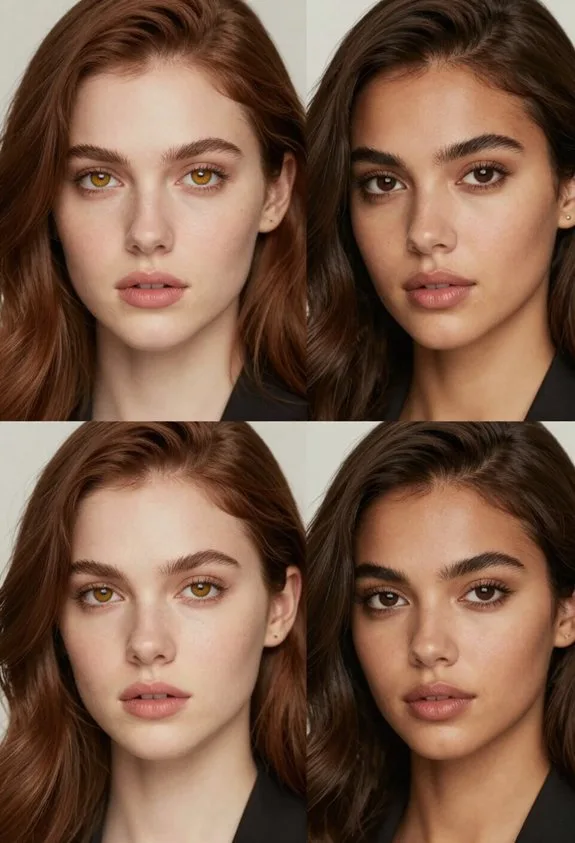
While maintenance schedules matter, lifestyle demands often dictate which brown shade will truly work long-term. Active individuals benefit from low-maintenance chocolate browns that hide root regrowth effectively. Professional environments call for classic medium browns that project polished competence without demanding constant upkeep.
Busy parents appreciate caramel-highlighted brews requiring touch-ups every 8-10 weeks instead of monthly appointments. Beachy lifestyles suit sun-kissed honey tones that naturally lighten with UV exposure, creating dimensional depth without salon visits.
“Choose your shade based on how much time you realistically dedicate to maintenance,” explains colorist Marcus Webb. Warm brunettes work beautifully for those committing to regular treatments. Cool-toned espresso browns suit occasional maintenance approaches.
Consider your daily routine when selecting formulations. Sulfate-free shampoos extend color longevity across all lifestyle categories.
How to Talk to Your Colorist About Brown
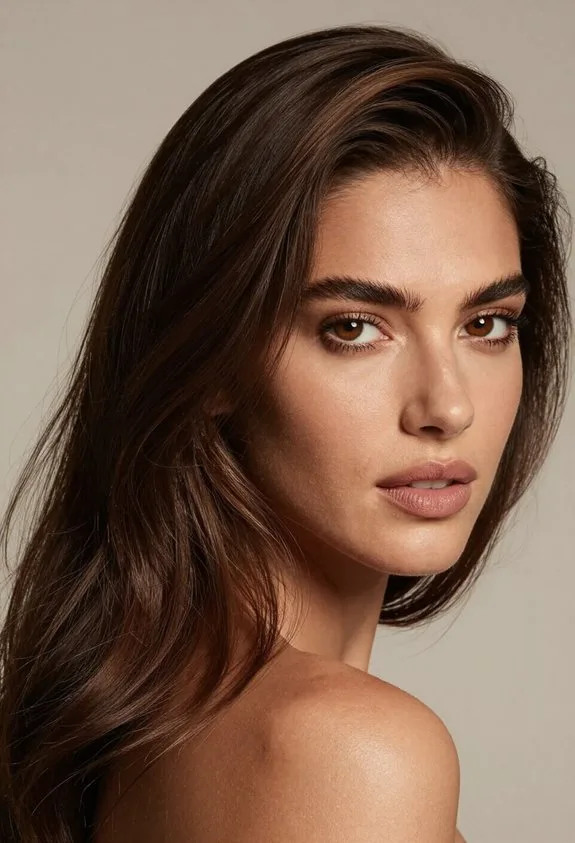
How do you bridge the gap between the brown shade you envision and what actually happens in the salon chair? Communication is everything. Bring reference photos showing specific brown tones, lighting conditions, and undertones that appeal to you. Discuss whether you want warm caramels, cool chestnuts, or rich chocolates.
Use precise language. Say “dimensional” instead of “highlighted.” Specify “balayage” or “babylights” for placement. A colorist explains, “Clients often describe colors vaguely—show me exactly what you mean.”
Mention your maintenance comfort level. Rich brunettes require touch-ups every four to six weeks. Bring swatches of clothing you frequently wear to guarantee the brown complements your everyday palette.
Ask about toning products like purple shampoo to maintain vibrancy and prevent unwanted warmth.
Test Your Brown Shade: Photo Simulations
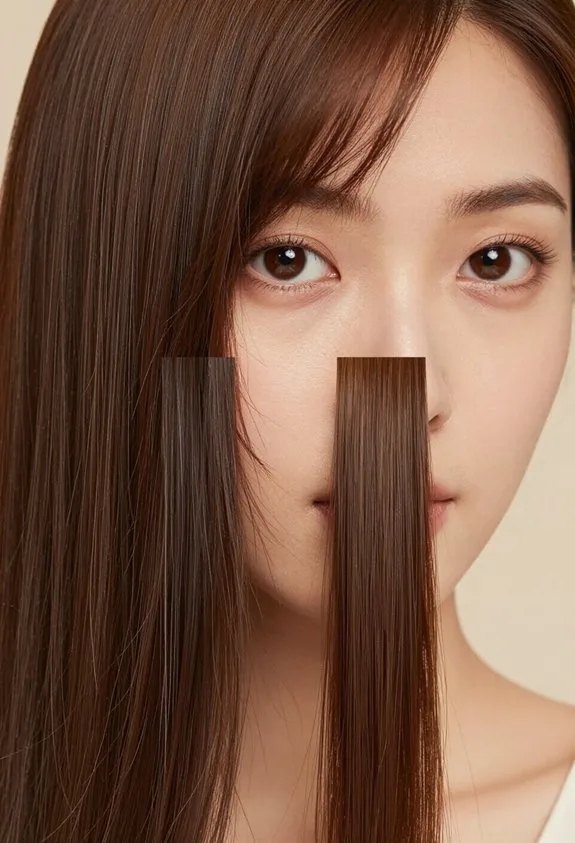
Before committing to a permanent brown shade, digital photo simulations offer a risk-free way to preview how different brunette tones will transform your appearance. Apps like YouCam Makeup and Modiface use advanced technology to overlay realistic hair colors onto selfies. This allows people to test warm chocolates, cool ash browns, and caramel highlights before salon visits. Most simulations adjust for lighting conditions, skin undertones, and facial features with impressive accuracy. Professionals recommend saving multiple versions showing different angles and lighting scenarios. Colorists often appreciate clients bringing these digital previews to consultations. The technology eliminates guesswork and builds confidence in shade selection. Virtual try-ons work best when paired with detailed photos of desired inspiration styles and honest conversations about maintenance requirements.
The Swatch Test: Finding Samples in Person
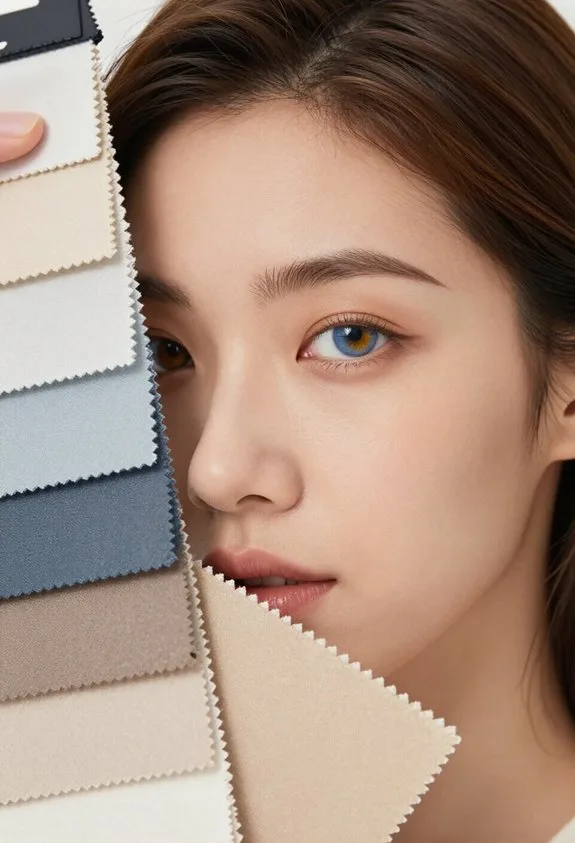
Digital previews provide valuable guidance, yet nothing replaces the tactile experience of examining actual hair swatches under natural and indoor lighting. Most professional salons maintain physical color wheels displaying brunette variations from cool ash tones to warm caramel hues. Clients benefit from requesting samples that match their specific undertone—golden, neutral, or ashy—since screen displays often misrepresent true pigmentation. Hair stylists recommend holding swatches against the face near the jawline and cheekbones, observing how each shade interacts with skin and eye color simultaneously. Natural daylight reveals undertones most accurately, while artificial salon lighting shows how the color appears during evening settings. This hands-on approach eliminates guesswork. According to colorist Maria Chen, “Swatch testing prevents costly mistakes by confirming compatibility before commitment.” Documenting favorite samples through photos creates personalized reference materials for future consultations.
Common Brown Hair Mistakes to Avoid
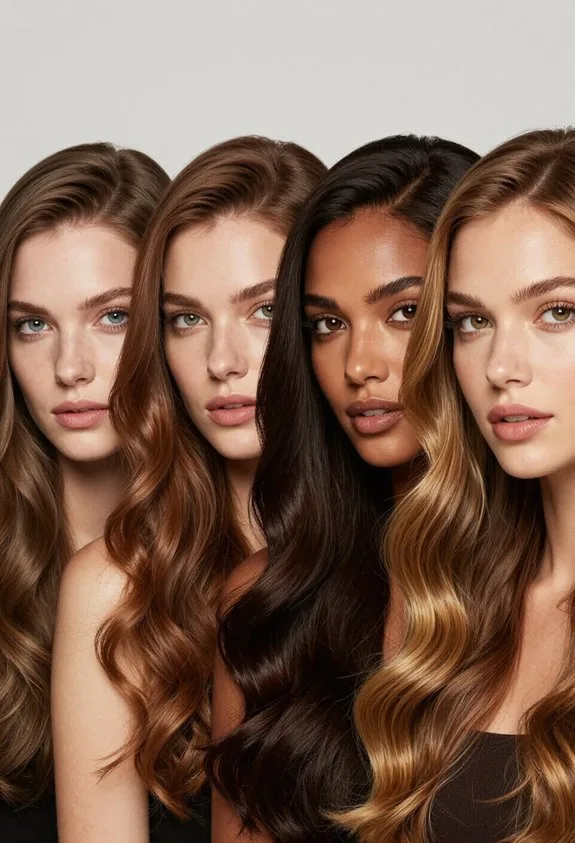
Even with careful swatch testing, many people still make preventable errors when selecting their brown shade. Choosing a tone too dark creates harsh shadows around the face. Conversely, selecting shades lacking depth can appear washed out and unflattering. Many overlook their undertones entirely, applying warm browns to cool complexions and vice versa.
Another common mistake involves ignoring dimension. Flat, one-dimensional brown lacks movement and vibrancy. Strategic highlights and lowlights create depth that complements facial features naturally. According to colorist James Chen, “Dimensional brunette transforms ordinary brown into something truly dimensional and alive.”
Rushing the application process also causes regrets. Professionals recommend strand testing before full commitment. Neglecting proper toner maintenance allows unwanted brassiness to develop. Additionally, using wrong shampoo formulas strips color faster than necessary. Strategic color care preserves richness and longevity considerably.
Next Steps: Booking Your Brown Hair Appointment
Finding the right colorist marks an essential turning point in achieving that perfect brown shade. Research stylists who specialize in brunette work and review their portfolios carefully. Look for before-and-after photos matching your skin tone and eye color specifically.
Schedule a consultation before committing to the full appointment. Discuss dimension, undertones, and maintenance requirements thoroughly. Bring reference images showing desired results. A skilled colorist will assess your hair’s current condition and recommend appropriate techniques like balayage or rooting for dimension.
Ask about recommended products for color maintenance. Quality shampoos and conditioners preserve vibrancy between appointments. Discuss touch-up schedules based on your natural growth rate. Professional colorists typically recommend every 4-6 weeks for ideal results, depending on the chosen shade and technique complexity.
Frequently Asked Questions
How Long Does It Take to Go From Blonde to Brown Hair?
The shift from blonde to brown hair typically takes two to four hours, depending on the hair’s current condition, the desired brown shade, and the colorist’s technique. Professional application guarantees ideal results.
Will Brown Hair Make Me Look Younger or Older?
Brown hair typically makes one appear younger by adding depth and dimension to the face. Darker shades create contrast that softens features and diminishes the visibility of fine lines and wrinkles associated with aging.
Can I Achieve Brown Hair Without Damaging My Natural Hair?
Brown hair can be achieved with minimal damage through semi-permanent dyes, root touch-ups, and professional application. Deep conditioning treatments and low-heat styling further protect natural hair integrity during the coloring process.
What’s the Difference Between Box Dye and Professional Brown Coloring?
Box dye contains stronger chemicals and one-size-fits-all formulas, often causing uneven results and damage. Professional coloring uses customized formulas, expert application techniques, and quality products that minimize damage while delivering precise, personalized color results.
How Do I Know if Brown Hair Will Suit My Face Shape?
One determines if brown hair suits a face shape by considering whether warm or cool brown tones complement facial features. Consulting a stylist who analyzes bone structure, skin undertone, and eye color helps identify the most flattering shade and placement.
Conclusion
Selecting the right brown shade requires understanding your unique undertone and eye color combination. With proper testing through photo simulations and in-person swatches, you’ll discover a flattering hue that enhances your natural features. Avoid common mistakes like neglecting maintenance or choosing shades that clash with your complexion. Book your appointment confidently, knowing you’ve found the perfect brown to illuminate your individuality and express your personal style authentically.